

The Journal
Strategy & thoughts from a TA-turned-designer on websites, fees, and the business foundations for independent travel advisors.

10 Strategies for Independent Travel Advisors To Stand Out & Not Burn Out
After 12 years at Flight Centre and 4 years as an independent advisor before becoming a web designer, I've seen what works on both sides. This post breaks down ten essential strategies for travel professionals to build an online presence that’s sustainable.

How To Implement Travel Planning Fees That Feel Aligned & Sustain Your Business | A Case Study
Ever feel like you’re working around the clock for clients who don’t value your time? By 2019, Caitlin was drowning in client requests, endless revisions, and no-shows who promised to book but disappeared. Sound familiar? She knew something had to change before burnout got the best of her.

How to Customize the Font on Your Mailerlite Embed Form
You did everything right in MailerLite, dropped the embed into Squarespace, and then…ugh. The fonts don’t match. Consistent branding matters, especially at key conversion points. In this post, I’ll walk you through how to target MailerLite embed forms using developer tools and custom code so everything looks seamless.

6 Must Have’s on Your Travel Advisor Website
In a sea of Travel Advisors all offering the same services, a custom website that truly reflects you can set you apart. Attract the clients you actually want, show your value, establish your expertise, and streamline your process; all while building trust through thoughtful blogging and a personal-touch newsletter.
on Branding & Positioning

Most travel advisors can describe what they book. Fewer can explain clearly why a client should choose them specifically. This post breaks down what positioning really means, the different ways you can build one without narrowing your business, and the questions worth sitting with to find your honest answer.

Your website copy sounds professional. It's warm, it mentions your experience, and it could belong to almost any travel advisor online. If that sentence landed somewhere uncomfortable, this post is for you. We're covering why generic copy happens, what brand voice actually looks like in practice, how to figure out which voice type you are, and what to do with that information once you have it..

Images on your website, blog, and social media should tell a well-crafted story that fits with your brand and message. Through strategic content curation and photoshoot planning, you can ensure your imagery is doing its job.
on Running a Travel Business

This one's for the travel advisor who came from somewhere else, a corporate role, a client-facing career, a decade of managing projects, people, or both, and is letting the word 'new' talk them out of charging what they're worth. You didn't leave your skills at the door when you switched industries. This post is a reminder of who TF you are.

AI is reshaping how people plan travel. I explore why travellers still need human advisors, what AI tools are helping and how to update your website to stand out in the AI era. Includes data, insights, and must-have website strategies for 2026.

This guide breaks down why fees are non-negotiable, what the industry is charging right now, how to handle objections like a pro, and why your branding might be the reason clients aren't taking you seriously. Plus: real scripts you can use today and resources to finally get your business looking as professional as the service you provide.
After 12 years at Flight Centre and 4 years as an independent advisor before becoming a web designer, I've seen what works on both sides. This post breaks down ten essential strategies for travel professionals to build an online presence that’s sustainable.

Learn how travel advisors can monetize their websites by sharing authentic recommendations, building trust, and leveraging tools like Squarespace. From curating travel gear lists to setting up paywalls for exclusive content, you’ll find actionable tips to turn your website into a revenue generator.
Ever feel like you’re working around the clock for clients who don’t value your time? By 2019, Caitlin was drowning in client requests, endless revisions, and no-shows who promised to book but disappeared. Sound familiar? She knew something had to change before burnout got the best of her.
on Client Experience

Most travel advisors have the first four stages of the client journey pretty well covered. It's stages five through eight, the pre-departure prep, the mid-trip check-in, the welcome home email, the referral ask, where things can go sideways. This post walks through all eight stages, what should actually be happening at each one, and where the gaps tend to show up.
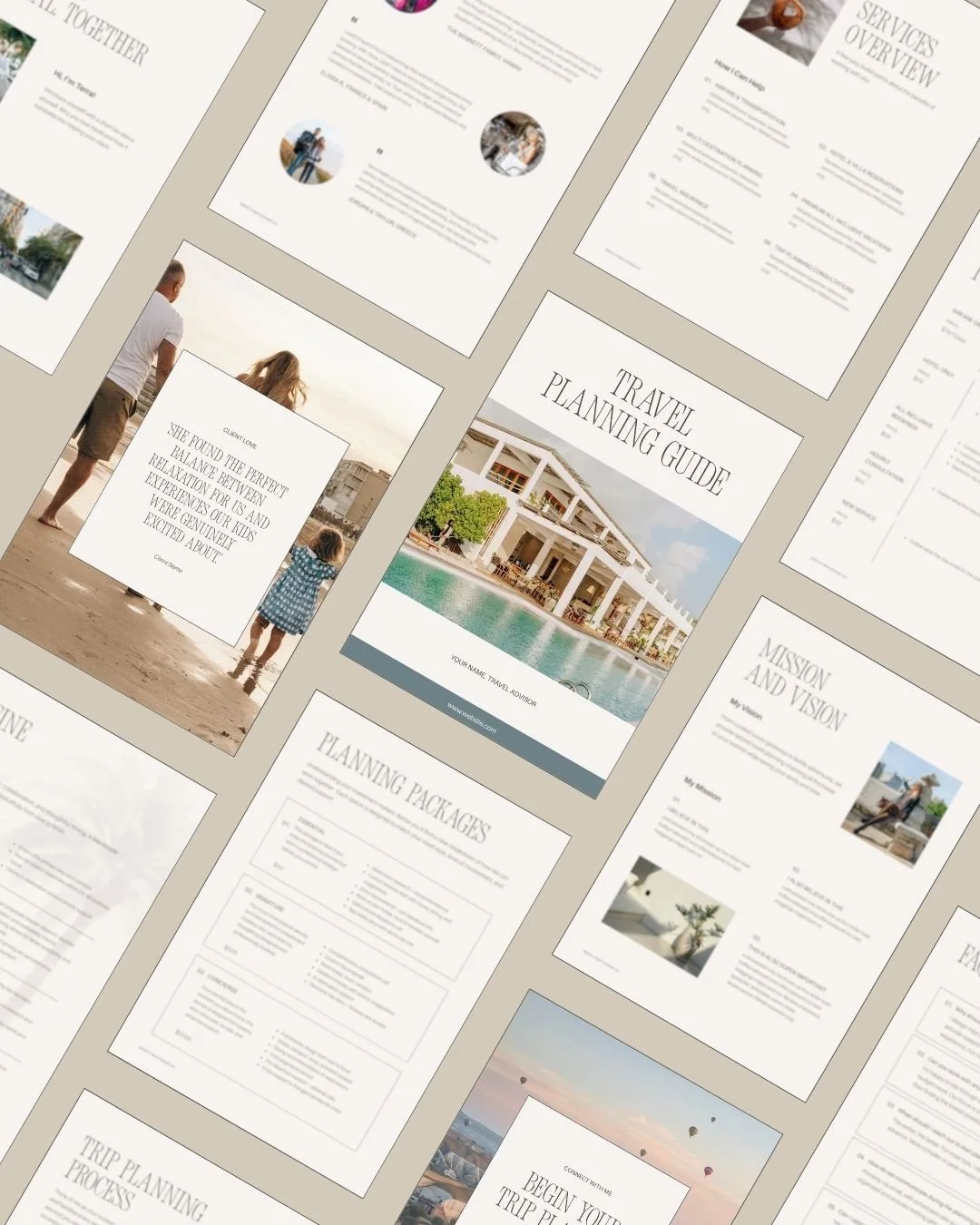
Landing a new client is exciting, but the first impression they form often happens before you even talk. From discovering you online to your first call, clarity and structure shape how confident they feel in working with you. This post walks through why onboarding matters, what can go wrong without it, and how a well-designed welcome guide can make the whole process feel effortless, for you and your clients.

Most travel advisors collect feedback but rarely use it strategically. In this post, we go over why the right questions matter, what to look for, and how to turn client insights into language that does the selling for you so your fee stops feeling like something you have to justify and your process becomes rock solid.

From instant gratification to keeping your clients hooked, we'll uncover the top five reasons why a killer thank you page is a must-have in your digital arsenal and follow with how to build one on your Squarespace website.
on Blogging, Design, SEO & Website Strategy

What's actually behind that 'this looks expensive' feeling, and what's working against your positioning without you realizing it. Written for independent Travel Advisors in the FIT, luxury and premium market who are past the 'do I need a website' question

Almost everything written about SEO for travel websites is written for booking platforms. Here's what actually works for independent Travel Advisors, and where to start, especially if you’re using Squarespace.
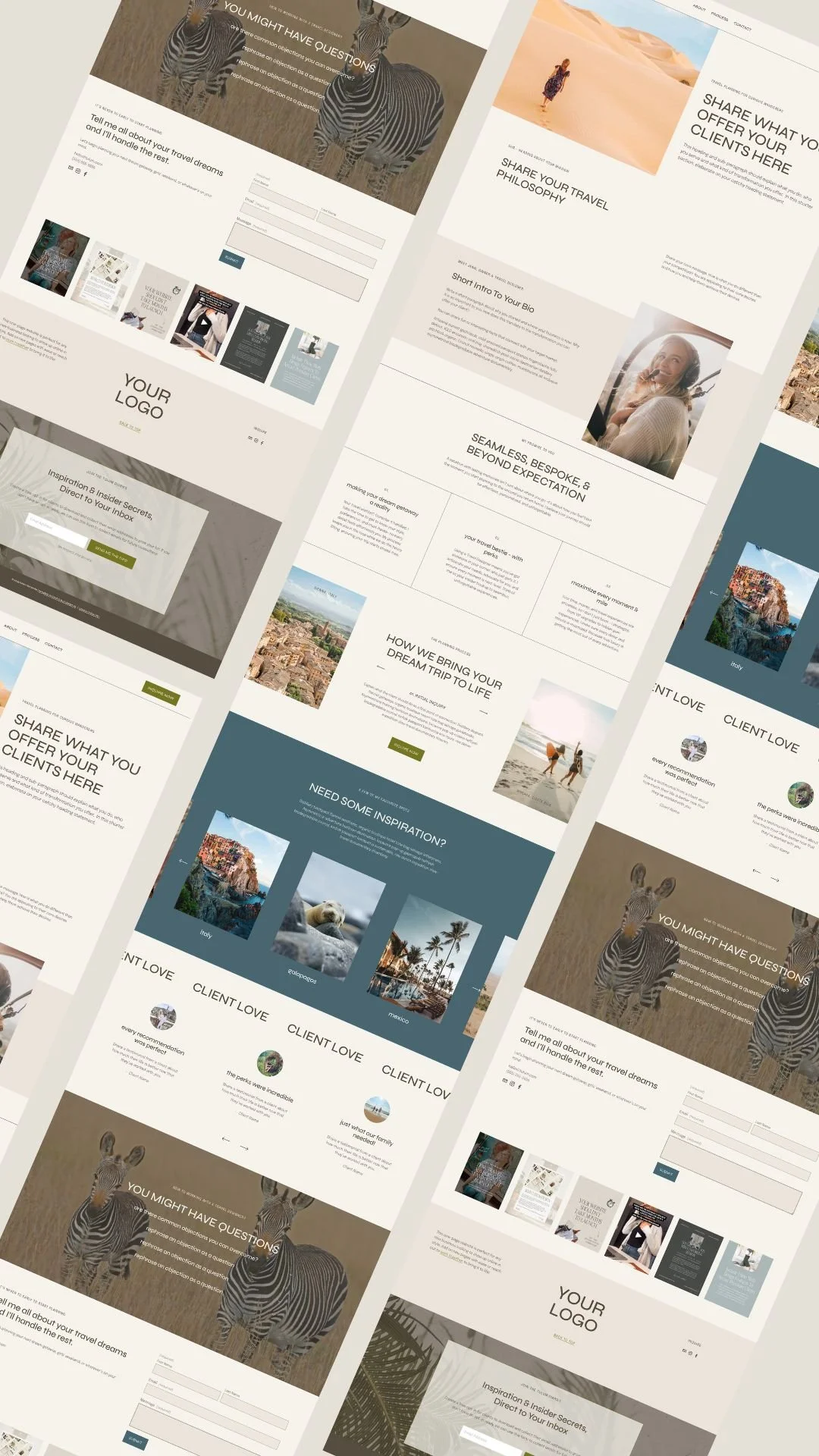
If clients land on your travel advisor site and leave without reaching out, it's almost never about design. It's the questions your copy didn't answer.

A real comparison of every website option a travel advisor is likely to run into, from travel-specific platforms like Travefy and Truevail to general builders like Squarespace, Showit, and WordPress, plus the quick-fix options like Canva and Carrd. We'll cover what each one actually costs (USD and approximate CAD), what you own versus what you're renting, SEO, ease of use, and how to figure out what makes sense for where you are right now.

For the advisor who's been putting off the website decision, or who isn't sure the investment is worth it when referrals and social media are already working. We'll cover what a website actually does that Instagram can't, what your potential clients are doing before they ever talk to you, and the different ways to get started without losing your mind.

Adding a blog to your Squarespace site isn’t about pumping out content or chasing what’s hot. It’s about creating a purposeful space that works for your business; attracting aligned clients, building trust before the first call, and showing how you actually think about your work.

Save money on your Squarespace website billing plan including email marketing, courses, digital products, scheduling and more with the latest Squarespace discounts. As always, use code BIRCH10 at checkout to save 10% on your Squarespace website billing!
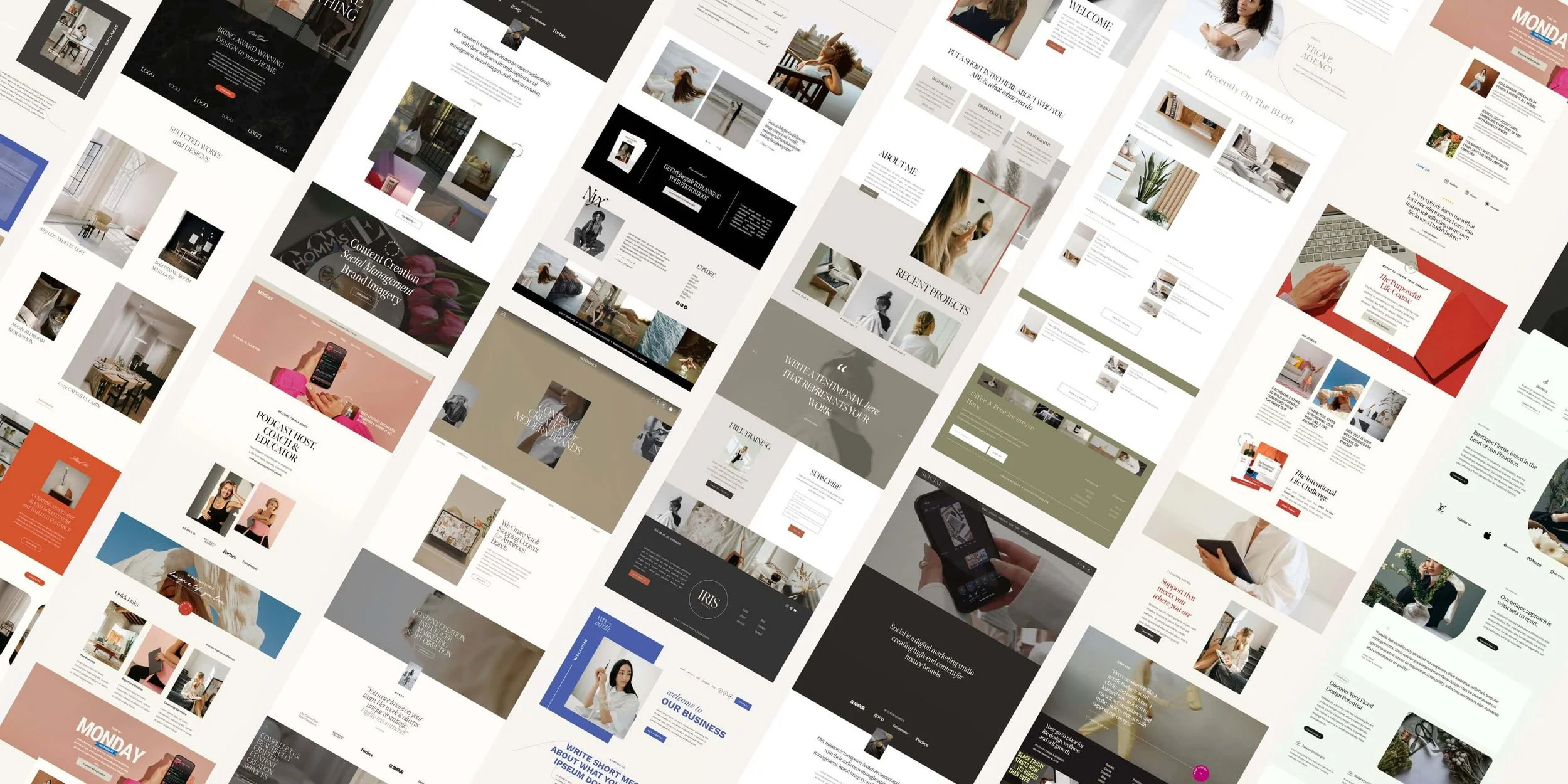
Building a website that truly reflects your travel brand doesn’t have to mean starting from scratch or hiring a designer right away. If you’re a travel advisor or agency ready to DIY your site, choosing the right Squarespace template can make all the difference. Dive in to find my favourite template shops & enjoy some savings!

As someone who pours so much care and attention into your work, you deserve a travel advisor website that truly reflects your unique approach to travel planning. If you’re still using the standard site your host agency provides, you might be missing out on an opportunity to connect more deeply with your clients.

There’s so much that can be crafted beyond the Squarespace grid that can elevate your website with unique and interactive design elements. I’m still on the side that simplicity and accessibility reign, but that doesn’t mean boring so I’m sharing a few features and resources so you can get creative too.

When I audit websites, I notice the same gaps over and over —elements that could be turning curious visitors into loyal clients. In this post, I’ll walk through six essentials inspired by the StoryBrand framework, showing how clear messaging and customer-focused design can transform your site’s experience and conversion.

In this multi-part post, I cover some key strategies to implement in Squarespace and throughout your blog to enhance the chances of actually getting your thoughts and knowledge found on the interweb.
now in the birch & Bud Design Co. shop
Process and design templates, tools & guides — made just for Travel Advisors
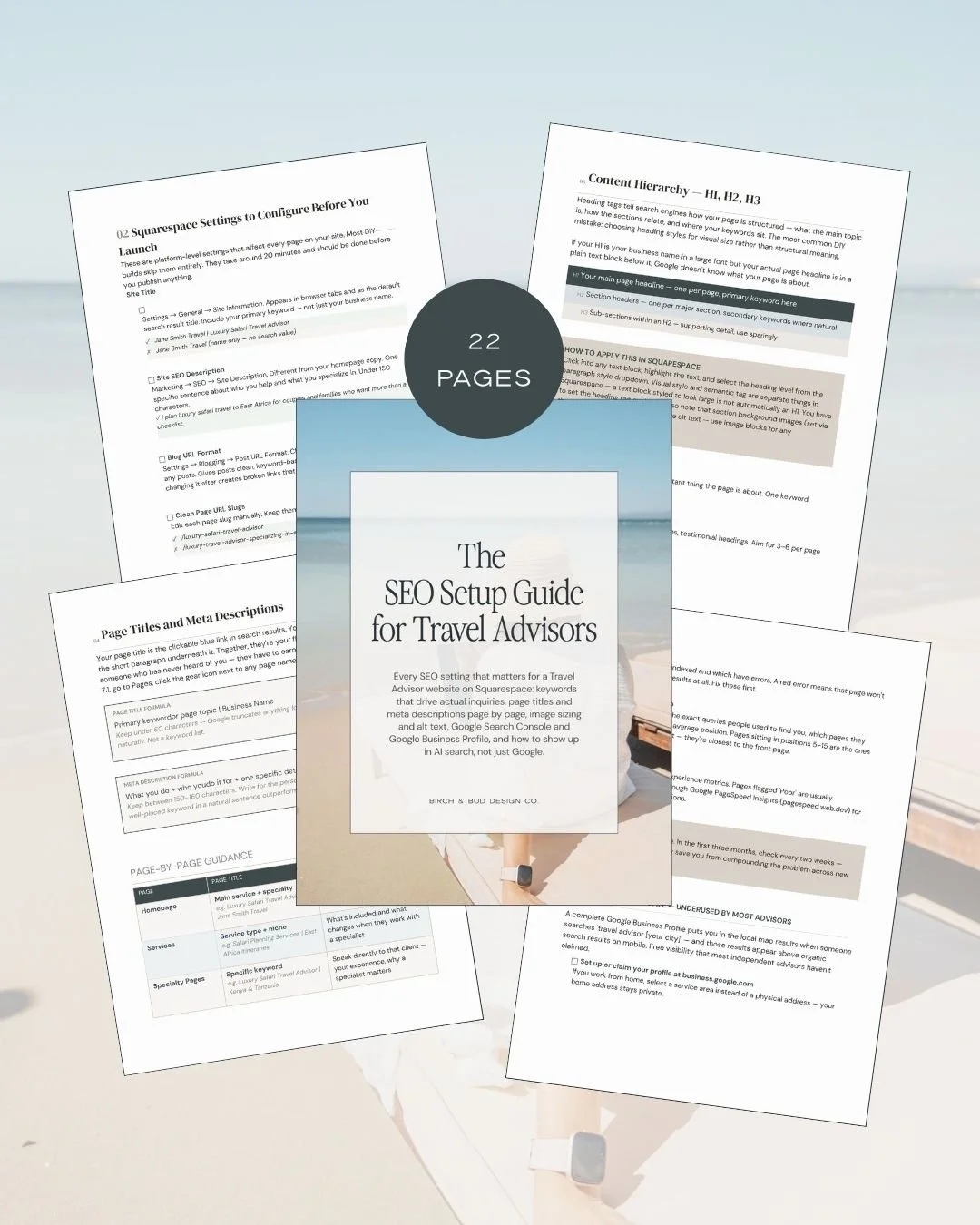
Get found by the clients who are already looking for you.
You built the website. You wrote the copy, finally. And you still have no real sense of whether Google knows you exist.
What you need is a handful of specific settings done correctly, and a short list of the right keywords, and that's genuinely most of it.
This is the layer that sits underneath your website copy, the technical and strategic groundwork many skip because it’s never been laid out.
This is for you if:
Your website copy already exists or is in process
You want a clear, ordered checklist instead of scattered advice to get your SEO fundamentals optimized
Bonus if you're on Squarespace: several sections walk through exact settings on the backend
This isn't for you if:
You want someone to implement it for you rather than a guide to work through
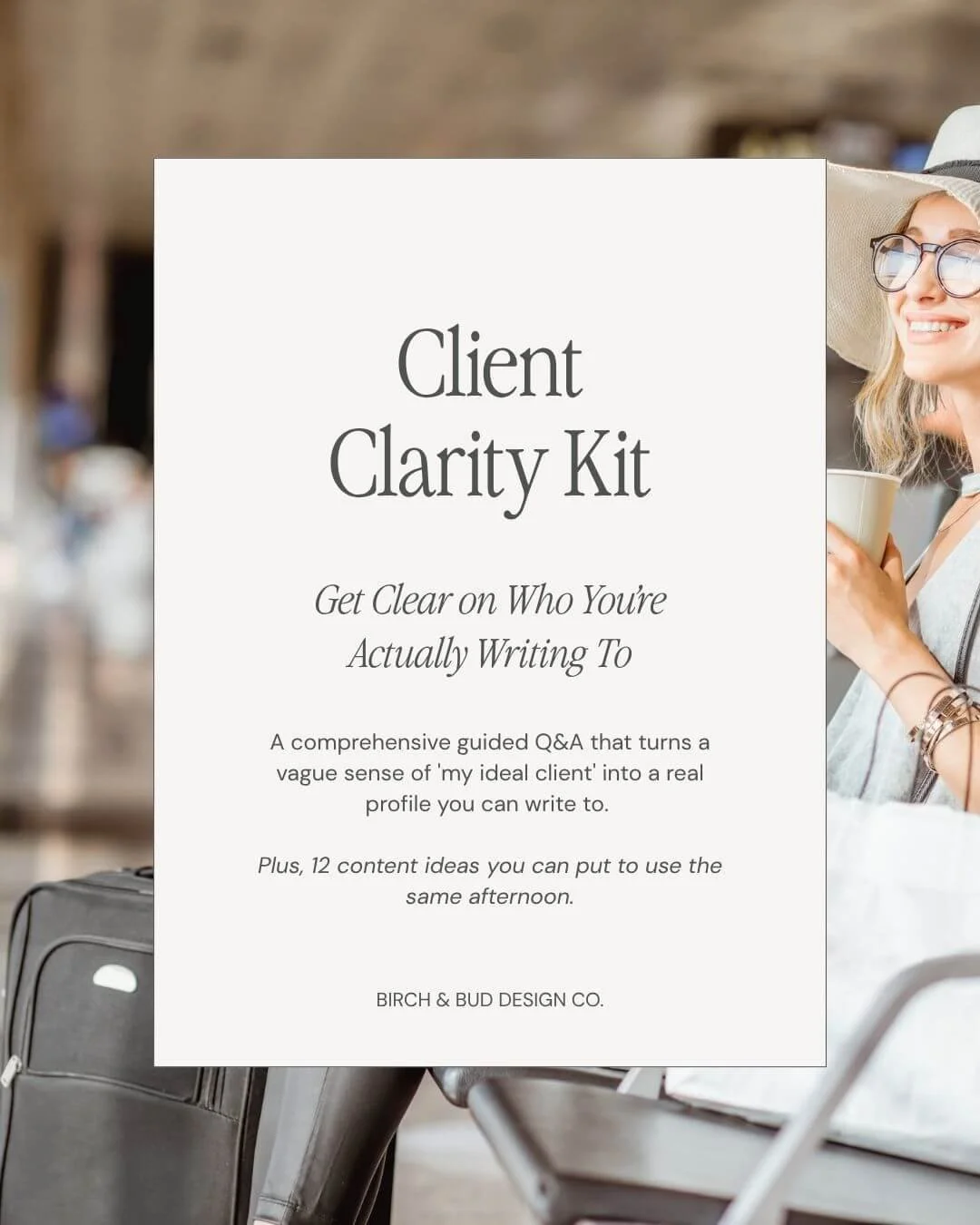
Most advisors don't have a clarity problem. They have a commitment problem. This tool helps you get clear on who you're actually writing to so your content, your website, and your discovery calls stop doing all the heavy lifting.
If you've done the avatar worksheets and they didn't help, this is different. A guided Q&A doesn’t just ask client demographics. It turns a vague sense of ‘my ideal client’ into a real, usable profile you can write to, utilizing AI outputs, plus 12 content ideas you can put to work the same afternoon.
Writing about your business should be easier than it is.
But the words get muddled because you're trying to speak to everyone who might book with you — and that pulls your messaging in too many directions at once.
So your content kind of lands, but not consistently. You find yourself explaining your services from scratch on every discovery call. And you’re putting time into marketing that doesn’t clearly lead anywhere.
Clarity on who you're writing to is what makes your copy feel specific. Without it, even strong services come across as generic. With it, the right clients read your content and recognize themselves in it.
Who it's for
Travel advisors with a strong offer, but no clear way to communicate it and struggle to talk about it in a way that feels clear, consistent, and like them.
If you're tired of explaining your value on every call, attracting inquiries that don’t quite fit, or posting content without a clear direction — this is for you.
This isn’t a quick-fill template. It’s a focused exercise designed to give you something you can actually use across your content, your website, and your sales process.
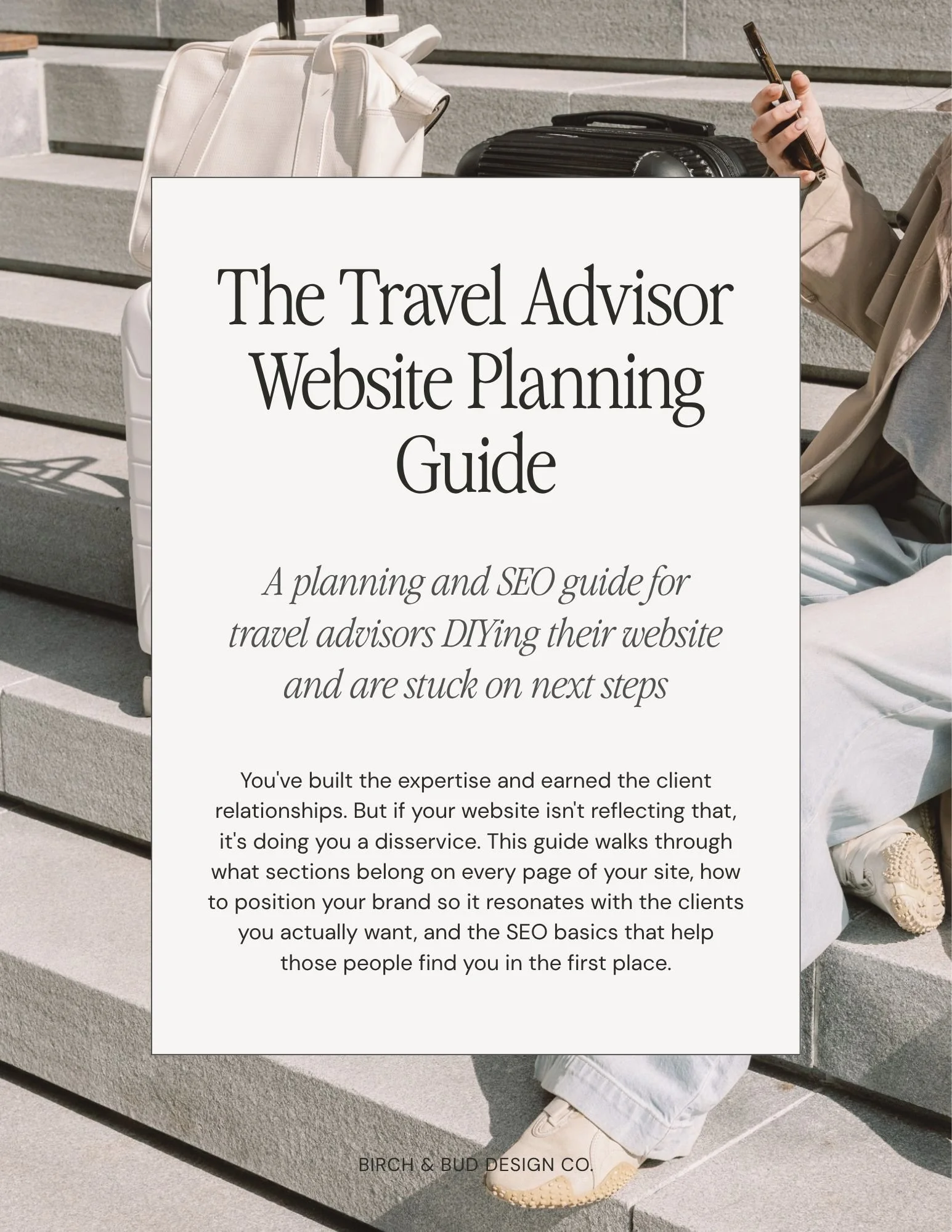
You know your website matters. You've probably sat down more than once to work on it, opened a blank page, and thought 'where do I even start?'
It's not easy to know what goes on each page when nobody's actually shown you. What belongs where, why it matters, and how to organize it all so the right people trust you before they ever pick up the phone.
This guide starts with the strategy most travel advisor websites skip: how to position your brand so it actually resonates with the clients you want to attract.
Then it walks through what every page of your site needs to have on it, page by page, with a full SEO section so the right people can find you in the first place.
TL;DR A positioning, content, and SEO guide for travel advisors who want a site that actually works, not just one that exists.
Who this is for:
Works best when you know your ideal client. Not sure yet? Start with the Client Clarity Kit first.
Travel advisors (or any service provider) who know their site needs work but aren't sure what to fix first
Advisors building a new website who want to get the structure and content right from the start
DIYers on Squarespace (or others) who want their site to convert, not just look nice
Advisors who've been meaning to 'fix my website' for months and need a clear, page-by-page plan
Advisors who want to show up in search results but have no idea where to start with SEO
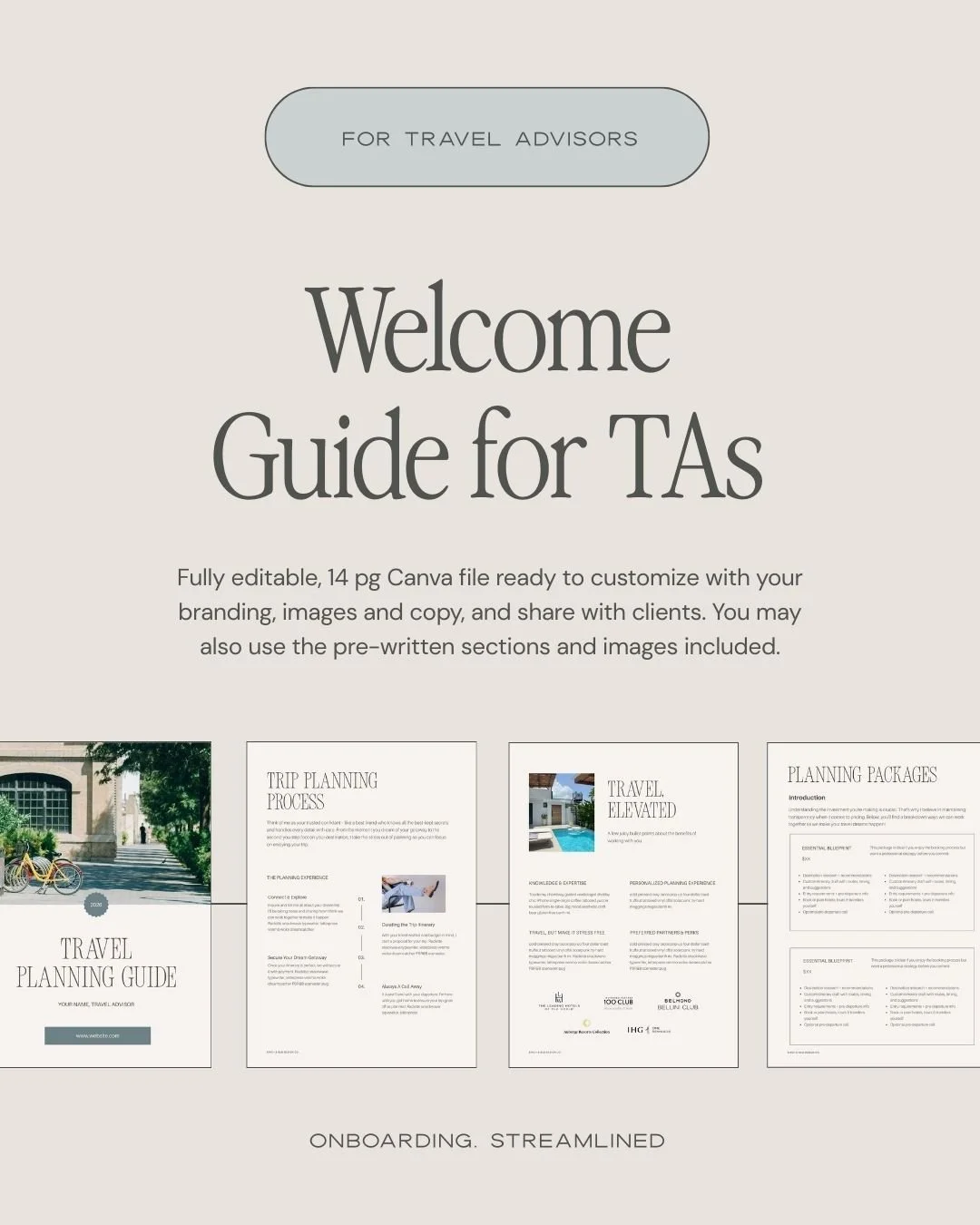
Start every client relationship with clarity and confidence.
The moment a client says yes (or maybe) is full of momentum, but it’s also when expectations are being formed. A thoughtful onboarding experience ensures your clients understand how you work, what to expect, and how to move forward with ease.
This Travel Advisor Welcome & Service Guide is a professionally designed, editable Canva template created specifically for travel advisors who want their client experience to feel as elevated as the trips they design. The design is done. You replace the placeholder text or use what’s there.
Instead of piecing together emails or stumbling over your value, you’ll have one cohesive, branded document that introduces your business, outlines your process, clarifies roles, answers common questions, and guides next steps — all in a clean, polished format you can share with clients.
That means fewer repetitive emails, clearer communication, stronger boundaries and a client experience that feels intentional from day one.
Perfect for:
Independent travel advisors
Boutique agencies
Luxury and wellness travel pros
Retreat planners
Anyone tired of repeating the same info via email 24/7
The goal isn't to document a perfect process — it's to build one from where you are.
The inquiry that didn't get a fast enough response. The proposal that went out without a request for a planning fee. The client who came home to silence instead of a welcome email. The referral that never got asked for.
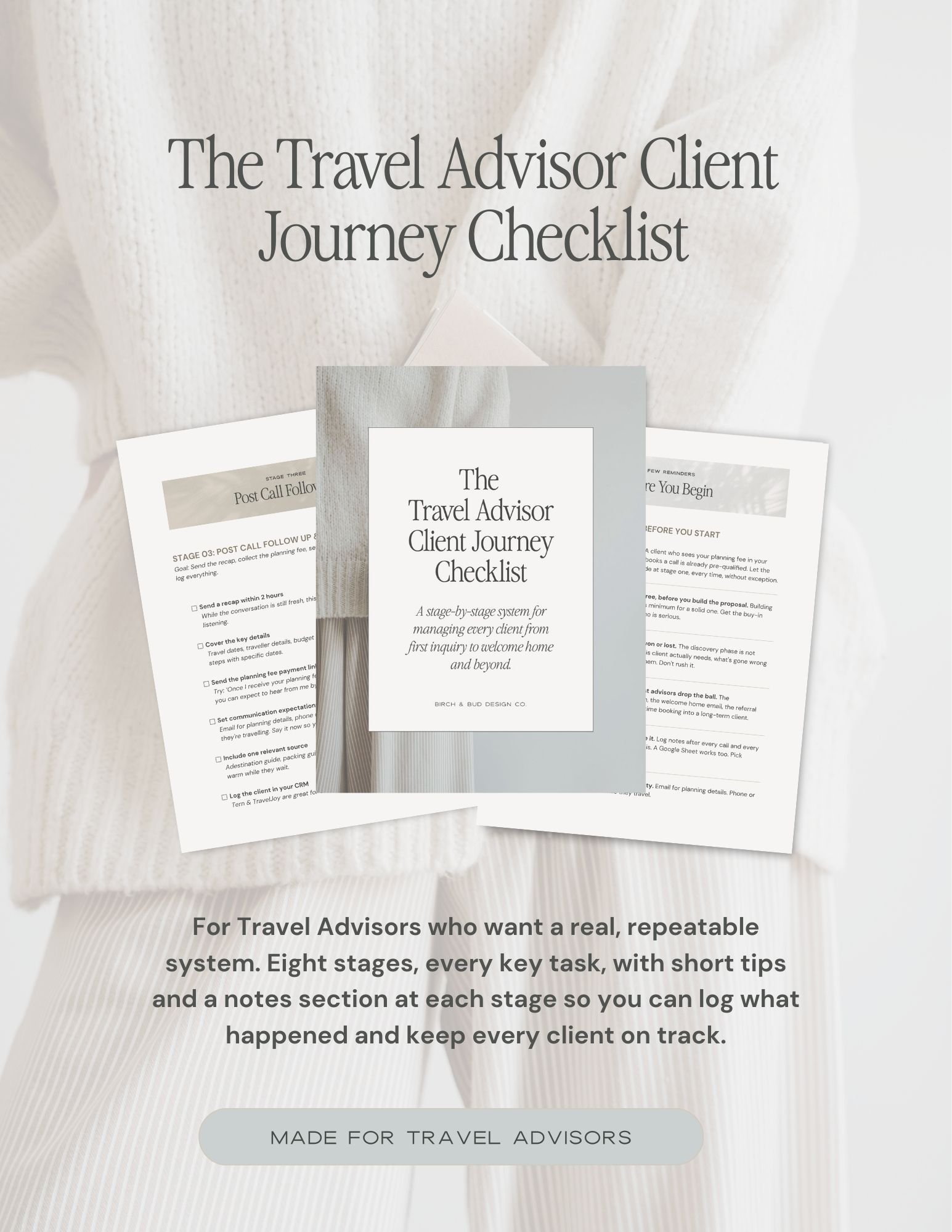
This checklist exists so none of that happens. It’s a working document, not a reference manual, and can be duplicated for every client.
Designed for travel advisors who want a real system, not a list of vague reminders. It walks you through every stage of the client journey from first inquiry to building your referral pipeline. Eight stages, every key task, with short tips and a notes section at each stage so you can log what happened and keep every client experience on track.
BONUS! Get the interactive Discovery Call Guide tool! Find it in the Intake Call portion of the checklist.
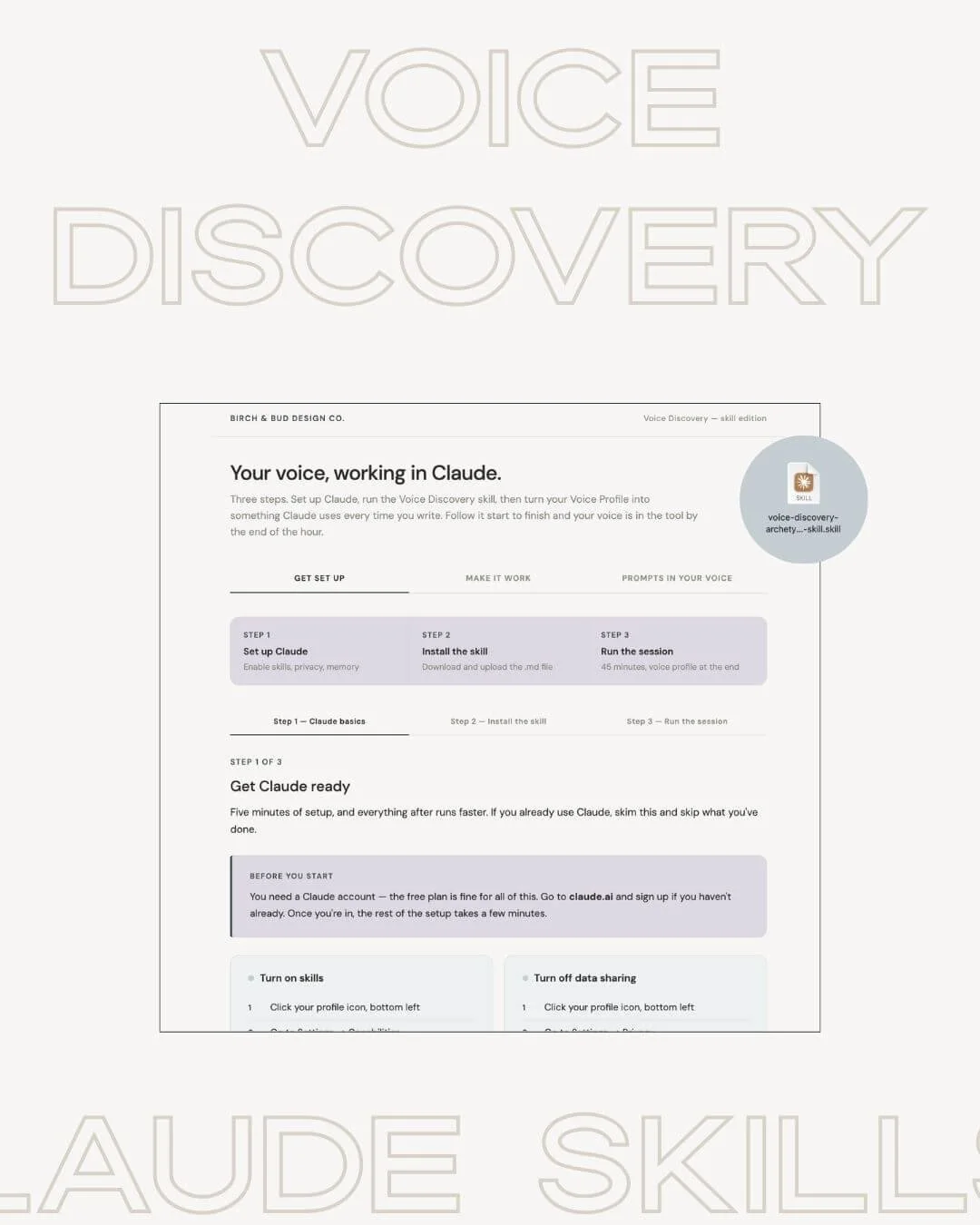
If you've described your voice to AI and got generic copy, use Claude regularly but need to re-explain yourself from scratch every session, or think better out loud than on paper, the Voice Discovery Skill is for you.
It's a custom Claude skill file made just for Travel Advisors that turns Claude into a voice discovery coach. You upload it, type 'help me create my brand voice', and Claude interviews you — asks how you talk to clients, what frustrates you about how other advisors sound, what makes working with you actually different. It reflects patterns back in real time, identifies your voice archetype, and produces a full Voice Profile at the end.
Then the dashboard that comes with it walks you through turning that Voice Profile into a working voice in Claude — a skill file and a preferences blurb that Claude uses every time you write. Plus ten prompts organized by when you'd actually use them, so the voice starts doing work on day one.
TL:DR: A Claude skill that runs a 45-minute guided Voice Discovery session, plus a dashboard that turns your Voice Profile into a working voice inside Claude. Same voice work as the workbook, different delivery. If you work better on paper, you might prefer the Voice Discovery Guide.
Who this is for:
Travel advisors who've tried to write marketing copy and are frustrated because they couldn't figure out how they actually sound
Advisors who use (or want to use) AI tools but keep getting generic output that doesn't sound like them
Advisors who prefer a conversation over a workbook
Advisors building a new brand from scratch

You can talk about your business all day. On a discovery call, with a colleague in a Facebook group at 11pm. The words come easily because you're just being yourself.
Then you sit down to write your website copy or an Instagram caption, and suddenly you sound like every other travel advisor online. Polished. Generic. Not quite you.
That's not a writing problem. It's a voice problem, and these exercises help you hone in on what you already know.
This comprehensive guide walks you through five exercises designed to help you identify how you actually communicate — your natural tone, the words you reach for, the things you say that nobody else would say quite that way. It's the work you do before you write anything. Before you hire a copywriter. Before you brief a designer. Before you ask an AI tool to write in your voice.
Once you know what your voice actually is, everything else gets easier.
TL:DR
Five workbook-style exercises to help you figure out how you actually sound, so you can stop writing copy that feels like it could have come from anyone. If you're more of a talker, you might prefer the Claude Skill version of this discovery.
Who this is for:
Travel advisors who know their current copy sounds generic but don't know how to fix it
Advisors who can talk confidently on discovery calls but freeze when writing website copy or emails
Advisors who've hired copywriters before and hated the result because 'it didn't sound like me'
Advisors building a new brand and starting from scratch
You picked a niche. You said it out loud, put it on your website, and felt the relief of finally having a clear answer when someone asks what you do. But if clients are still arriving unclear on whether you're their person, you've stopped one step short