
The 8 Stages of a Successful Client Journey as a Travel Advisor
Blog Overview: Most travel advisors have the first four stages of the client journey pretty well covered. It's stages five through eight, the pre-departure prep, the mid-trip check-in, the welcome-home follow-up, and the referral ask, where things fall apart. This post goes through all eight stages, what should actually be happening at each one, and where the gaps tend to show up. [10 min read]
The booking isn't the finish line. It's the midpoint. You know that, though, right?
It may sound counterintuitive when you've just spent weeks on an inquiry. The calls, the proposals, the follow-ups, and you finally get the yes (happy dance!). It feels like the hard part is done. But the travel advisors with clients who rebook every year, refer their friends without being asked, and leave reviews that do your marketing for you? They've figured out that what happens after the yes matters just as much as everything before it. Usually more.
None of it is complicated. It's just consistent. And once you have a system, it stops feeling like extra work and you find a rhythm.
Here's the full picture: all eight stages, what's actually happening at each one, and where things tend to fall apart.
Stage 1: Initial Inquiry
Someone finds you. Maybe through your website, an Instagram DM, or a referral from a past client. However they got there, this is your first impression, and speed matters more than most advisors realize.
Clients are usually shopping around. If you take two or three days to respond, there's a real chance they've already booked a call or their trip with someone else already. Aiming to reply within a few hours is ideal — 24 hours is the outer limit, and even that can feel like a long time from their side of it.
Your first reply doesn't need to do much. Acknowledge them warmly, sound like a real person who's genuinely excited to help, and get them onto a call. That's it. No proposal yet — you don't have nearly enough information, and you haven't built any trust. A scheduling link through something like Calendly or Acuity takes care of the back-and-forth and signals straight away that you're organized.
This is also the right moment to send your Welcome and Service Guide. Before a potential client commits to a call, they're already asking themselves questions. Things like how does this work, what does she specialize in, what's this going to cost me all swirl through their head. A well-put-together guide answers all of that before you've spent a minute on the phone. It also does something else: it filters. The right clients read it and lean in. The ones who aren't a fit tend to self-select out. Both outcomes save you time and energy.
A strong service guide covers your niche so people know immediately whether you're the right fit, walks them through how you work, and introduces your fees upfront.
That last one is the big one.
A client who books a call after seeing your fees is already pre-qualified. They've read the number, and they're still interested, which means you're not walking into that conversation dreading the moment when talking about money comes up. I know you’ve been there.
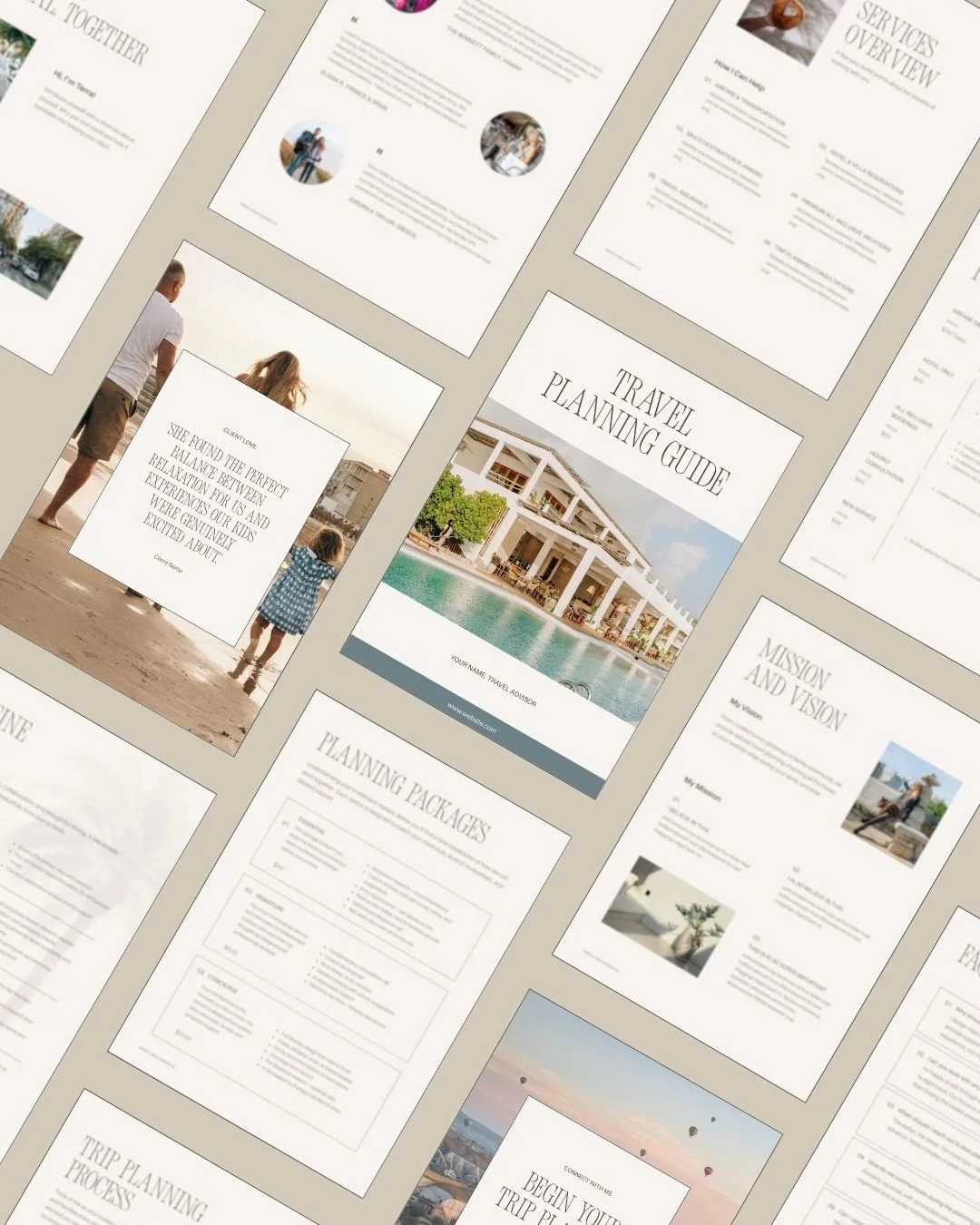
Start every client relationship with clarity and confidence with the Travel Advisor Welcome & Service Guide Template
Get started with this professionally designed, editable Canva template, created specifically for Travel Advisors who want their client experience to feel as elevated as the trips they design.
Stage 2: The Intake Call
This is where trust actually gets built, and done well, it's also where you start earning your fee before you've mentioned it.
The call works best when it follows a loose structure rather than a script: a warm intro, a real discovery phase, a walkthrough of how you work, clear expectations, and a confident close with defined next steps. The whole thing usually runs about 40 to 50 minutes when you give it the space it needs. You could half it depending on the trip style or if they’re a repeat client, but focusing on what they want and need is key.
The part most advisors rush is discovery. It's easy to spend a few minutes on surface-level questions and then jump straight into talking about yourself and your process. But discovery done properly is closer to 15 to 20 minutes of genuinely going deep. What does this client want to feel on this trip? What's gone wrong in the past? What are they quietly worried about? What does a really successful holiday actually look like to them?
That information shapes everything you do from then on — the properties you suggest, the experiences you build in, the upsells that feel like good advice rather than a pitch. More than that, it's how you make someone feel genuinely understood, which is honestly what gets you the booking more than anything else you do on that call.
It's also worth remembering that the intake call works both ways. If someone is resistant to your fee, dismissive about timelines, or has expectations that don't line up with reality, that's useful information. 🚩🚩 🚩
Better to know now than three weeks into building their itinerary.
PS. I created a really cool interactive tool to keep you on track during the call! Now available as a BONUS when you purchase the Client Journey Checklist!
Stage 3: Post-Call Follow-Up & Planning Fee (yes, a fee)
Send a recap email the same day, ideally within a couple of hours of hanging up.
A recap that arrives while the conversation is still fresh tells a client that working with you is going to feel different. It shows you were listening, and that you follow through on the small things, which tells them you'll follow through on the big ones too. Cover the travel dates, traveller details, budget, their key priorities, and what happens next with specific dates attached. If you have a relevant resource to include, add it to keep things warm while they wait.
Now here's the step a lot of advisors skip. If the call went well and the client is ready to move forward, this is when you send the payment link for the planning fee — before you start building anything.
Building a proposal is real work. Research, supplier outreach, itinerary design, pricing — you can easily put four to six hours into a solid proposal before a client has committed to a thing. Sending a payment link before you dive in isn't pushy, it's just professional. And it tells you pretty quickly how serious they actually are.
Your follow-up email should include the recap, the payment link, and a clear outline of what happens once payment comes through. Something like: ‘once I receive your planning fee, I'll get started on your proposal, and you can expect to hear from me by [specific date]’. Simple, clear, no ambiguity.
Log everything in your CRM as soon as this email goes out. Tern and TravelJoy are both built with travel advisors in mind, or a well-organized Google Sheet beats trying to remember it all.


Stage 4: Proposal & Booking
Payment received 🚀 Now you get to do the part you're really good at.
A strong proposal is polished, easy to navigate, and makes it simple to say yes — a day-by-day overview, a clean pricing breakdown, what's included and what isn't, and clear next steps. Tern, Travefy, and TravelJoy all let you build and deliver proposals that look professional and feel effortless for clients to review. If you don’t have a CRM, try Gamma AI to craft beautiful proposals. For a more personal feel, more detailed proposals, and to eliminate unnecessary quesitons, record a video of your recommendations! I love Kommodo for this, although some use Loom. Kommodo has better pricing and more inclusions.
Bring up travel insurance in the proposal itself, not as an afterthought at the end (early and often, friends). A client who declines it after you've clearly recommended it is a very different situation from a client who didn't know it was on the table. Document that you offered it.
And build revision limits into your contract — two to three rounds is standard, with additional changes carrying an additional fee. You'd be surprised how quickly an itinerary reaches 'perfect' once revisions cost extra; I think we can all relate.
When you’re thinking back to your call and how they want to ‘feel’ on their trip, what upsells come to mind? The ones that land best are the ones that feel like genuine advice rather than an add-on. A private transfer for a family travelling with young kids and a lot of luggage. A swim-out suite for a couple celebrating an anniversary. Think about what would actually make this trip better for this specific client, and frame it that way, because that's exactly what it is.
If you don't hear back after sending the proposal, follow up around day three to five. If there's still nothing after that, one final note is enough: 'I haven't heard back, so I'll assume you've decided to go in a different direction. If that changes, I'd love to help in the future.' It closes the loop without chasing and leaves the door open.
Stage 5: Pre-Departure Prep
Two to four weeks before travel, send the full itinerary package, including confirmation numbers, flight details, hotel check-in information, transfer logistics, excursion details, a tailored packing list, and a Local Tips document. If it’s a big trip with lots of moving parts or clients who are easily overwhelmed, include a video overview using Loom or Komodo.
Those little extras make a big difference. Restaurant recommendations by neighbourhood, coffee spots, things to do on slower days, and emergency contacts, including your number, the local embassy, and the hotel concierge, streamline their trip experience. Without it, you will get texts asking where to eat dinner. With it, you have something to point them to, which everyone appreciates. Yes, it’s ‘extra’ and clients aren’t always great at reading, but it’s that touchpoint that shows you care. Maybe it’s your favourite restaurants at the resort, or an excursion you think they should try (with your link!). Make it personal.
The week before departure, a quick check-in to confirm everything is set also gives you a natural opening for a last-minute opportunity to upsell. Activities like private airport transfers or car service, a pre-arrival restaurant reservation, local excursions, or travel insurance are great options. Clients are in full trip mode at this point and often genuinely happy to say yes to anything that makes arrival feel easier.
Stage 6: During the Trip
You're available, not hovering. Who has time for that, anyway?
One mid-trip check-in is plenty; a short message asking how everything's going. Most advisors skip this entirely, but it takes about 30 seconds, and it matters. It shows you care about the experience and not just the booking, and it gives you a chance to catch something small before it turns into a problem or a review you'd rather not have.
Genuine emergencies like missed flights, overbooked hotels, safety concerns, etc., get an immediate response, no matter the hour. Questions about where to eat dinner can be directed back to the Local Tips doc.
Stage 7: Post-Trip Connection
The trip is over, but the relationship isn't.
Within three to five days of their return, send a welcome home email. Ask how it went, what their favourite moments were, and make it easy to share feedback. Happy clients genuinely want to help — the barrier is usually that they're not sure what to say or where to say it.
If the feedback is strong, ask directly for a written testimonial, and plant a small seed for next time. 'Already thinking about where to go next year? I've got some ideas.' Not a pitch. Just a door left open.
Update your CRM while the details are still fresh — travel style, accommodation preferences, what they loved, what fell flat, anniversaries, birthdays. This is what makes your outreach feel personal six months from now instead of like a mass email.

Refine your service, strengthen your positioning, and build trust with future clients
If your feedback process feels inconsistent, awkward, or underused — you’re not alone. I created this free resource to help travel advisors ask better questions, get more meaningful responses, and turn client insight into something useful: clearer messaging, stronger referrals, and real trust.
Stage 8: Building Your Referral Pipeline
Happy clients are your easiest sales. The question is just whether you have a system for turning that goodwill into referrals, or whether you're hoping it happens on its own.
The best time to ask is when emotion peaks — right after they return, still blissful from the trip; when they leave a strong review; when they rebook. That's when a referral request feels completely natural. Keep the ask simple and direct: 'I'm so glad you had such a great experience. If you know anyone else who's planning a trip, I'd love to help them too.'
A referral incentive like a travel credit when someone they refer actually books, VIP perks on their next trip, whatever gives them a tangible reason to follow through.
Staying on their radar between trips doesn't have to be much. A seasonal travel idea, a destination you know they'd love based on what's in their profile, a heads up about something worth booking early. Relevant and useful, not a newsletter for the sake of filling their inbox — but those are also a great idea if you’ve got that on lock.
The loop looks like this: great experience, honest feedback, testimonial, referral, new client, repeat.
Want the whole system in one place?
I put together a comprehensive stage-by-stage Google Doc Checklist that covers everything in this post — every task, every stage, with space for notes and client details so you can duplicate it for every new booking.
It's only $17 CAD, and it's yours to keep and customize. Grab it here.
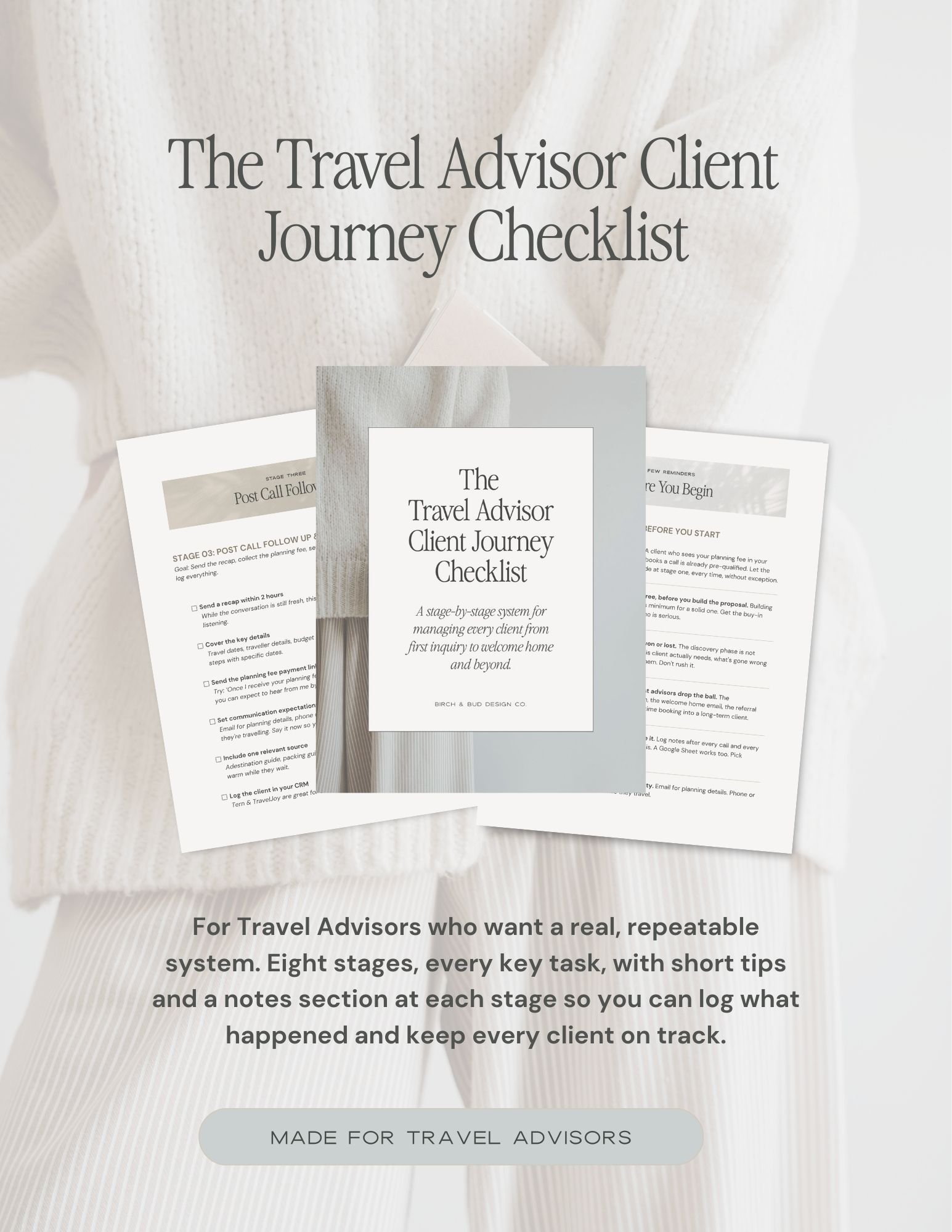
Get set up for success with a clear framework on your client journey from end to end
The inquiry that didn't get a fast enough response. The proposal that went out without a planning fee request. The client who came home to silence instead of a welcome email. The referral that never got asked for.
This checklist exists so none of that happens.
Designed for travel advisors who want a real system, not a list of vague reminders. It walks you through every stage of the client journey from first inquiry to building your referral pipeline. Eight stages, every key task, with short tips and a notes section at each stage so you can log what happened and keep every client experience on track.
Many advisors stop the effort at stage four
The clients who stay, who send their friends, who come back year after year without you having to chase them, they exist because someone followed through on the whole journey, not just the parts that lead directly to the booking. You don't have to overhaul everything at once. Just pick the stage you consistently let slide and start there. That's usually where the most is being left on the table, and it's almost always an easier fix than it looks.
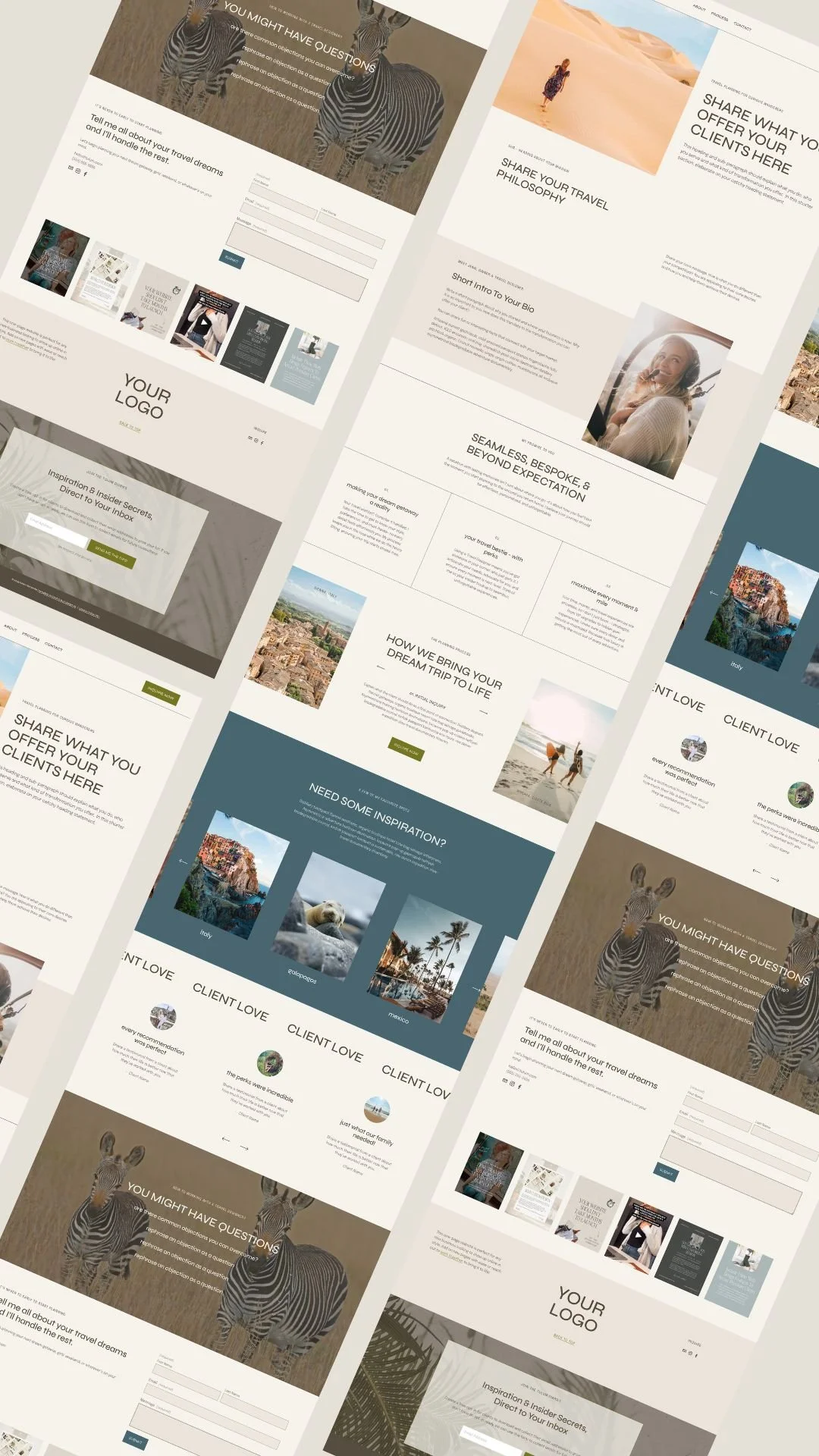
Want to take the next step and match your website to your expertise and level of clients you serve? At Birch & Bud Design Co., I understand the heart and soul you put into your work. Your website should be a reflection of that passion, a space where your clients can see the care and thoughtfulness you bring to your role.
If you’re ready to invest in a website that truly represents your brand, I’m here to help!









This guide breaks down why fees are non-negotiable, what the industry is charging right now, how to handle objections like a pro, and why your branding might be the reason clients aren't taking you seriously. Plus: real scripts you can use today and resources to finally get your business looking as professional as the service you provide.