
New Travel Advisor? Your Current Skills Are Worth More Than You Think
Blog Overview: This one's for the travel advisor who came from somewhere else, a corporate role, a client-facing career, a decade of managing projects, people, or both, and is letting the word 'new' talk them out of charging what they're worth. You didn't leave your skills at the door when you switched industries. This post is a reminder of who TF you are. [Approx read time: 6 minutes]
You spent years, maybe decades, being genuinely good at your job. Managing clients, hitting deadlines, and holding things together when they started to fall apart. You were the person people called when something went sideways. You had the kind of professional reputation that took a long time to build, and you knew it.
And then you decided to do a mid-career pivot 👀 and became a travel advisor, and somehow you feel fresh out of uni and literally useless against clients who know it all.
But, you’re not.
In your head, a very convincing voice has been making the case that none of it counts anymore because you're new. New to this industry. New to the booking systems, the supplier relationships and the jargon that other advisors throw around like it's nothing. New enough that charging a real planning fee feels like something you haven't quite earned yet.
You're waiting to feel ready. And in the meantime, you're undercharging, or not charging at all.
That’s what I want to push back on.
What 'New' Actually Covers (and What It Doesn't)
Being new to travel advising means you're still building destination knowledge. You're developing supplier relationships that take time, trips, and conversations. You're learning the industry systems, figuring out what suppliers to use when, working out what tools you want to use and how you want to run your business. It’s a lot.
That's real, and it takes time. Nobody's pretending otherwise.
But here's what new does not mean: new to managing clients. New to professional communication. New to handling difficult conversations, setting expectations or catching the detail that would have become a much bigger problem if someone hadn't noticed it. New to running a project with moving parts and a hard deadline. New to making someone feel taken care of.
Those skills didn't appear when you passed an exam and hard-launched your business. You brought them with you. And they're doing more of the actual job than you're giving them credit for.
Imposter Syndrome Hits Different When You're a Career Changer
Imposter syndrome gets talked about a lot, to the point where the phrase has basically lost all its texture. But for those that have switched careers — especially midlife — it has a very particular shape: ‘I haven't been doing this long enough to charge real fees’. As if there's a specific number of bookings, a specific amount of industry time, after which it becomes okay.
So what's the threshold? How many trips booked before you're ‘allowed’? Where does the line actually move?
(Newsflash, it doesn't. That's the flaw.)
I changed careers at 44 (and multiple times before that 🤸). After/during COVID, I did the panny pivot from 15 years as an (on & off) TA to web design, which, if you want to talk about feeling like a fraud, try starting a business and learning a completely new industry mid-forties while the world is falling apart. I spent a long time feeling like I had no business calling myself a designer when there were people who'd been doing it for decades.
But here's what I actually think about that now: the imposter feeling isn't a sign that you don't belong. It's a sign that you actually give a shit about the quality of work and client experience you provide, and that you're growing. The people who feel nothing when they're doing something new are not the ones doing it right.
You can do a lot if you're resourceful and you don't quit. I'm not trying to be some mindset influencer, but the reality is — mindset matters. So does being resourceful. Everything is ‘figureoutable’ (a la Marie Forleo). Do. The. Work.
Process Over Experience Wins
The other flaw in the fraud logic: the clients you're most worried about aren't actually running a background check on your tenure. What makes someone trust an advisor isn't usually how long they've been booking trips. A lot of the time, it's how they make you feel, how organized they seem, how clearly they communicate, whether they ask the right questions — and actually listen to the answers.
The advisor with twelve years of experience and a chaotic process is not automatically the more trustworthy option. Experience matters, and it compounds over time. But professional polish isn't something you earn with tenure. It's something you either bring to the job or you don't. And a lot of you reading this? You already have it.
Transferable Skills That Matter as a Travel Advisor
Let's get specific about what you need that you might already be a master of — because this is the part that tends to get glossed over.
Project Management
A trip itinerary is a project. It has dependencies, deadlines, moving parts, and a very unforgiving timeline. If you spent years managing complex deliverables, coordinating across teams, and keeping track of a hundred details that needed to land in the right order, that is directly applicable. You know how to keep a thing from falling apart. That matters enormously in travel.
Client Communication and Expectation-Setting
This is honestly most of the job. Corporate and client-facing roles train you to communicate proactively, manage expectations before they become complaints, and handle difficult conversations without turning them into disasters. If you've spent years doing that, in financial services, healthcare, real estate, project management, sales, HR, anywhere you were responsible for a client or customer relationship, you have a skill set that a lot of newer advisors are still developing. Travel goes wrong sometimes. The advisor who knows how to hold a client through that is worth a lot.
Attention to Detail Under Pressure, or At All
Catching the error before it becomes a crisis. Noticing the thing that didn't quite match up. This isn't a personality quirk; it's a trained professional habit, and it protects your clients and your reputation in ways they'll never fully know. If you’re Type A, you’ll make a great TA.
A Professional Client Experience
Onboarding systems. Clear follow-up. Documentation. Communication habits that don't leave clients wondering what's happening or what comes next. A surprising number of advisors, including very experienced ones, operate in a way that's more chaotic than their clients would prefer. If you came from an environment where process and professionalism were just expected, you probably already operate at a level that would make your clients feel more taken care of than you realize.
If you spent ten years in financial services managing client portfolios, you've been managing high expectations, building trust with real money on the line, and handling the calls when something went wrong. That's not a different skill set from travel advising. That's the same skill set in a different context.
You didn't leave your skills at the door when you changed industries. You brought them with you.
📋 PS. If you need help with your Client Journey Process, check out the Client Journey Checklist in my Shop! It also comes with a Bonus interactive Discovery Call Guide to keep you on track during your calls!
What New Travel Advisors Actually Need to Learn
Now for the honest part, because pretending there are no gaps wouldn't be useful to anyone.
Some things take time to build, and it's worth naming them clearly so you can actually work on them instead of just feeling vaguely inadequate about everything.
Destination and Product Knowledge
You're not going to know everything, and you're not supposed to. But you do need to know something well enough to be genuinely useful, and that takes experience: trips, FAM opportunities, supplier training, BDM relationships. This is a real investment, and it compounds over time.
Supplier Relationships
The kind of relationship where a BDM will go to bat for you when something goes wrong. Those are built slowly, through volume, communication, and consistency. They're worth building deliberately. Attend the FAMS, webinar trainings, and industry events. Get visible.
Tech and Systems
This one catches a lot of career changers off guard, because corporate tech experience doesn't always map cleanly onto travel industry tools. CRMs like Travel Joy or Tern can feel overwhelming at first, not because you're not capable, but because they're specific and the learning curve is real. This is normal. Give yourself time to actually learn the tool you choose before you decide it's terrible. (Most of them are fine — even amazing — once you're past the setup phase.)
When to Niche Down as a New Travel Advisor
You'll hear a lot of advice to niche down immediately, and there's logic to it. And TBH, I’m a BIG believer in niching down. However, if you're earlier than six months in and you're not sure yet what you love or what clients you connect with most, that's actually useful information you're still gathering. A niche chosen before you have any data is just a guess. If you already know, go for it. If you don't, spend some time booking different types of trips, paying attention to which clients you light up for, and let a natural focus emerge. Niching at six to 9 months with a clear sense of what you actually enjoy is better than niching at two months because someone told you to.
Why New Travel Advisors Should Charge Fees From Day One
This is the one I really want you to sit with.
A planning fee is not something you get to earn after enough time in the industry. It's a business structure that reflects the value of your time and your professional expertise, and as we've just established, that expertise includes everything you brought with you when you walked in.
No amount of newness makes charging for your time wrong. You are a professional offering a professional service. The planning, the research, the expertise you apply to making someone's trip work, that has value on day one. Not the same value as five years from now, when you know more and have more relationships, but it still has value. Full stop. Increase your fees accordingly.
The advisors who charge from the beginning are usually the ones who build businesses that actually last. Not because they were more ready, but because they made a structural decision early that protected their time and attracted clients who took the service seriously. The ones who wait until they feel ready enough are usually still waiting. There's no finish line on that race.
You don't wait until you feel confident. You build confidence by operating like the professional you already are, and then you keep going.
What 'Looking Professional' Usually Means to Travel Clients
Here's something worth thinking about from the client's perspective.
When someone is about to hire a travel advisor, especially one they haven't worked with before, especially one they're paying a planning fee to, they're doing a gut-check. Not a credential verification. They're asking themselves whether this person seems like they have their act together. Whether communication feels clear. Whether the process makes sense. Whether they feel taken care of.
That gut-check happens before the first phone call, on your website or socials. It happens in the follow-up email you send after an inquiry. It happens in how your service guide is laid out, whether your packages are explained clearly, and whether you seem like someone who knows what they're doing and will handle things if something goes wrong.
A lot of that has nothing to do with years in the industry and everything to do with how you show up professionally. And for someone coming from a background where professional presentation was just the baseline, this is one of the places you're actually ahead.
Which leads to…
Make Sure Your First Impression Matches the Professional You Actually Are
One of the fastest ways to undermine the confidence you bring to the job is to have a client-facing presence that doesn't reflect it. If your social media is unbranded & chaotic, your website is unclear and generic, your follow-up is scattered, or your inquiry process makes you look like you're still figuring things out, that's what clients are seeing first, before they ever experience what you're actually like to work with.
The good news is that this is one of the most fixable parts of the whole equation.
If you're not ready for a full website yet, the Travel Advisor Welcome & Service Guide Template is a practical starting point. It's a 14-page editable Canva template with a structured layout for your services, process, packages, FAQs, and a clear call-to-action, plus ready-to-use copy in the sections that most people stall out on. You customize it with your branding and voice, and you have something professional to send after every inquiry that immediately changes how people perceive you before they've even talked to you properly.
For advisors who are further along and want something built around their business specifically, that's the website conversation. Either way, the goal is the same: your first impression should match the professional you actually are.
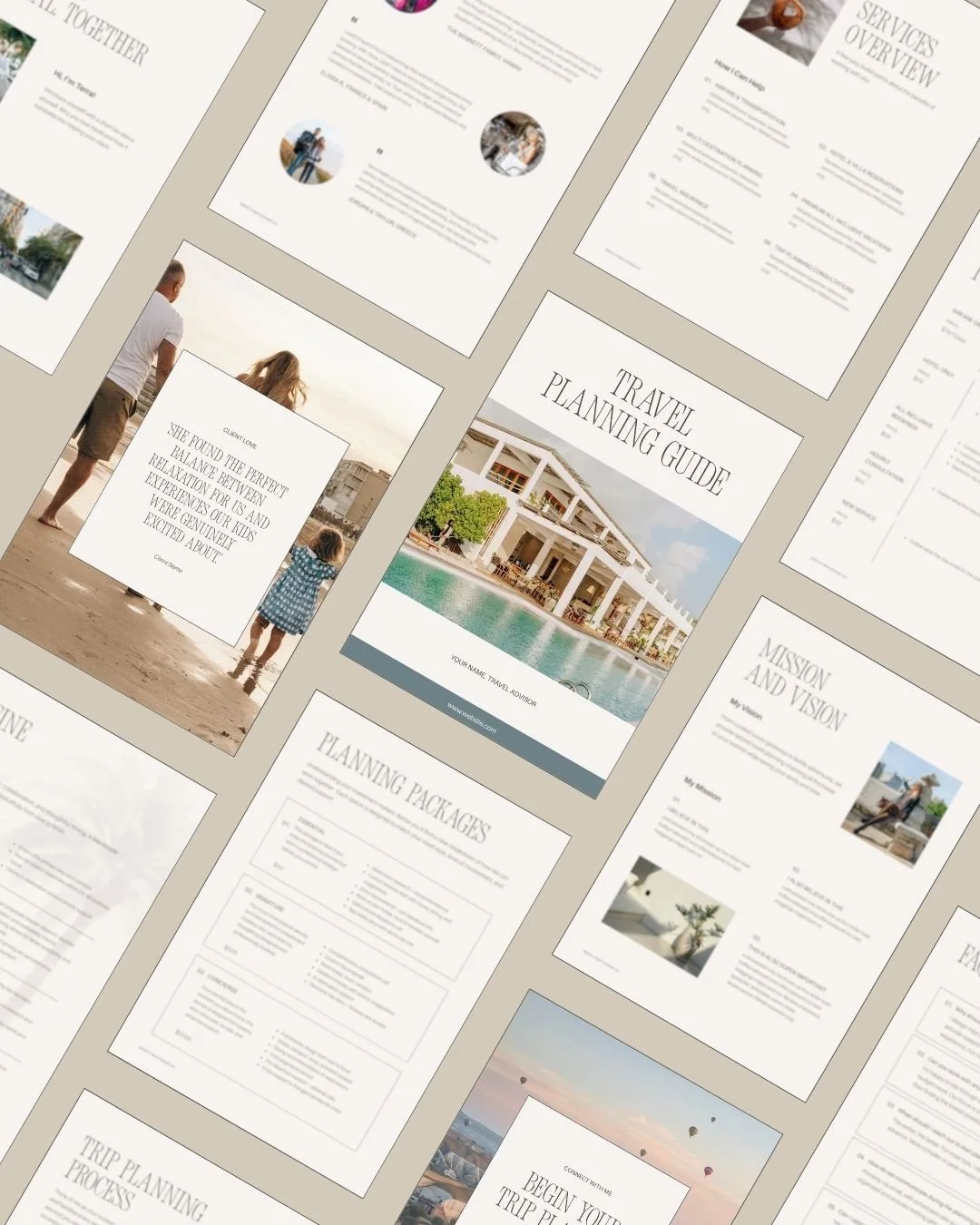
Welcome &Service Guide
A professionally designed, editable Canva template created specifically for travel advisors who want their client experience to feel as elevated as the trips they design.
Start every client relationship with clarity and confidence.
Where This Leaves You
You came into this industry with more going for you than you're giving yourself credit for. The imposter feeling is real, and it doesn't mean you don't belong here. It means you care about doing it well. That's not something to manage away. That's something to build on.
Give yourself grace and know what you're still developing, work on it deliberately, and don't let it be the reason you undervalue everything else you bring. You built a professional reputation once. You're building a new one now, and you're not starting from zero.
Charge accordingly.
And if the next thing on your mind is making sure your online presence reflects the clients you dream of working with and the client experience you’re providing, I'm happy to talk through what that would look like for where you are right now!
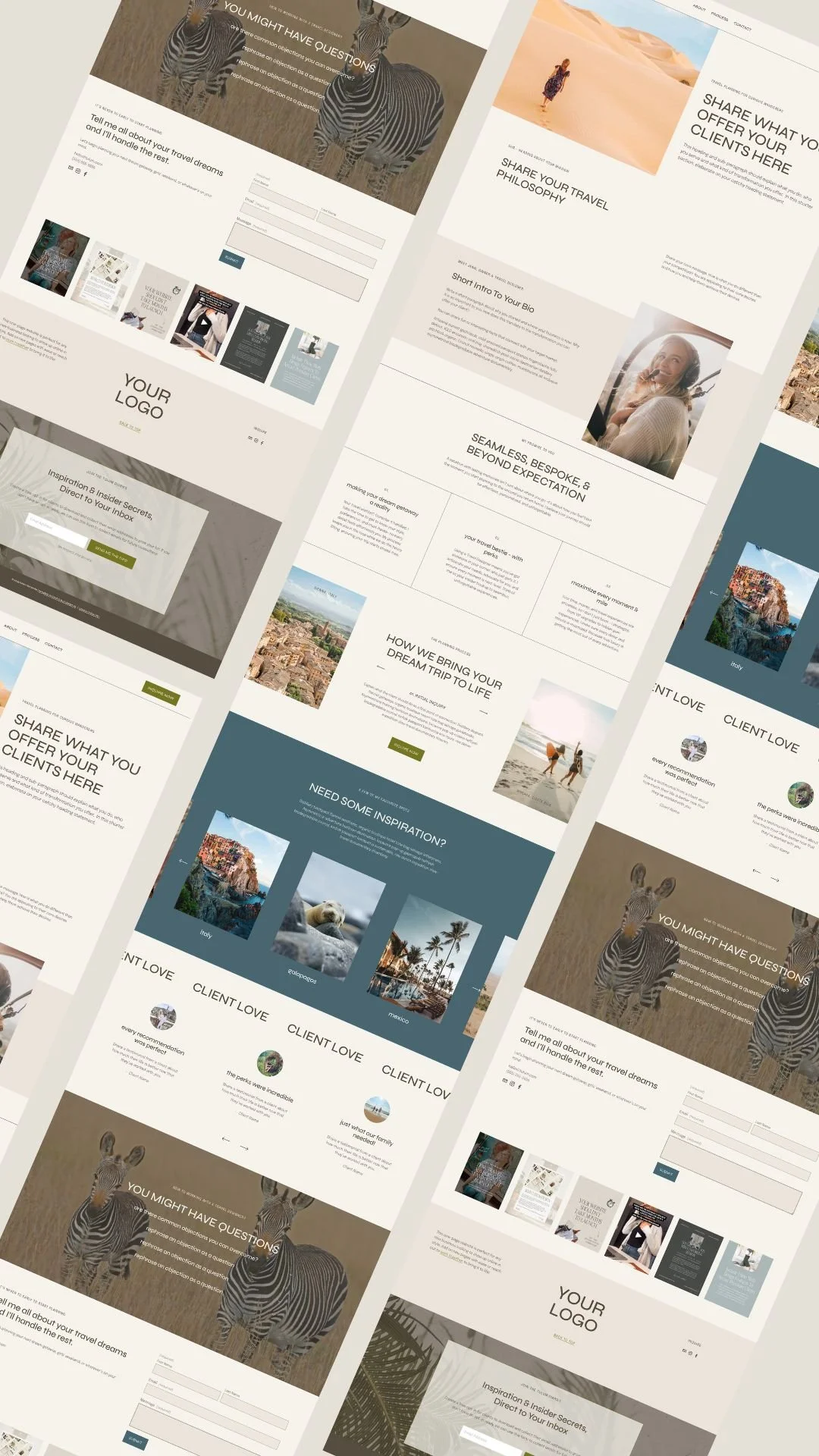







You picked a niche. You said it out loud, put it on your website, and felt the relief of finally having a clear answer when someone asks what you do. But if clients are still arriving unclear on whether you're their person, you've stopped one step short