
Five Reasons Your Travel Client Talked Herself Out of Contacting You
Blog Overview: This post is for Travel Advisors whose website gets visitors but not the inquiries to match. If people land on your website and leave without reaching out, it's rarely because they decided against you. They had questions, and your website didn't answer them. Here are the five that come up most. [Approximate read time: 8 minutes]
She found you. She Googled something like 'Italy honeymoon travel advisor' or 'safari trip planner,' clicked through, spent about 90 seconds poking around, and closed the tab. Probably along with the two other Travel Advisors' websites she had open at the same time. Then she went back to Pinterest to save more hotel photos she has no idea how to book (and that might not even suit her).
You never knew she was there. You also have no idea how often this happens, which is the uncomfortable part.
She didn't leave because of your fonts, or because your photos weren't pretty enough. She left because she had questions, specific and completely reasonable ones, and your website didn't answer them. Those questions were sitting in her head before she ever started searching. If she can't find the answers in about 30 seconds, she fills in the blanks herself, and those blanks are never generous.
Most Travel Advisor websites are written to impress. Passion for travel, years of experience, unforgettable memories. (You know the ones.) None of it touches the hesitation she's carrying when she lands on your page. She's looking for a reason to trust you enough to fill out the contact form, and that's a different job entirely.
So let's go through what's running through her head, and how your website can answer it like the professional you already are.
'I Can Probably Just Do This Myself’
This is the most common one, and the one most Travel Advisor websites ignore completely.
She isn't saying she wants to plan it herself. She's saying she doesn't understand what she'd be paying for. She knows how to use Google. Her friends book on Expedia. She books her own work travel. So what exactly are you doing that she can't?
A lot, obviously. But if your homepage says 'I create unforgettable travel experiences' and 'I handle everything so you can relax,' you haven't told her anything she can picture. Those are promises, and she's looking for specifics. The research hours behind a four-city itinerary, and the supplier relationships that get her an upgrade or a late checkout she'd never get booking direct. The fact that you've stayed at half the hotels you recommend, which beats a review written by a stranger in 2019.
The invisible work you do is the reason to hire you
Your website has to make that work visible. Walk her through what a week of planning looks like behind the scenes. Name the 80 browser tabs and the hour on hold with a supplier. Name the things she wouldn't know to look for, which happen to be exactly the things that matter when something goes sideways at 11pm in a country where she doesn't speak the language.
When you get this right, clients say something like 'she knew things I never would have found online.' That's what your copy should be pointing toward. 'I plan trips' won't get you there, and neither will 'I love travel.'
'I've Been Burned Before’
This one's about trust, and it's more common than most advisors think. If you've ever lost an evening to Travel Advisor horror stories on Reddit, you know what you're up against. (BTW, Reddit is fantastic customer research; it’s ruthless out there.)
She's had a bad experience, or her sister-in-law has. The advisor who went silent when her flight was cancelled, and the rebooking she assumed was included until she found out the hard way that it wasn't. The hotel room that looked nothing like the photos, and the voicemail nobody returned.
She doesn't know what 'working with a Travel Advisor' means in practice, because it means something different with every advisor. She's been burned by that ambiguity before, so now she's wary of it.
Your website can answer this before she asks
What do you handle? What's outside your scope? What happens when a flight cancels at 6 am, or a supplier goes under three weeks before departure? The advisors whose websites (and terms) spell this out build more trust than the ones promising 'seamless travel' with no explanation of what that means. 'Seamless' sounds lovely right up until she needs someone on the phone and doesn't know if that's you. Your FAQ is the obvious place for this, so use it.
And if you have a real crisis story, put it on your homepage, somewhere she'll actually see it rather than buried in a testimonial carousel or a blog post from 2023. The missed transfer in Rome. The Eurostar cancellation the night before Paris. And how you sorted it before your client had time to panic. Told specifically, that story does more conversion work than any headline about loving travel ever will.
What clients say when this works: 'She handled the problem before I even knew there was one.' That's about the highest-trust thing anyone can say about you, so if you have a version of that story, use it.
'I Like to Be in Control’
She doesn't want someone else running her trip. She wants help with her trip, and a lot of advisor websites accidentally promise the first one when they mean the second.
'Leave it all to me.' 'Sit back and relax.' It's meant to be reassuring, and for a certain client it's exactly what makes her close the tab. She's been thinking about this trip for years. She doesn't want to stop thinking about it, she just doesn't want to spend her evenings comparing transfer times.
The advisors who win this client describe the role accurately. She tells you what matters to her, you research and filter the options, and she makes the call. You're doing the part she doesn't have time for, bringing expertise she doesn't have, and handing it back so she can decide. She's still in charge. She just has better information.
So say 'collaborative' on your website, and mean it. Position yourself as the expert filter and let her keep the final say. When it works, you hear things like 'it felt personal, like she actually knew what we wanted,' and she stops feeling sold to.
'I Don't Know If It's Worth the Fee'
There are really two questions sitting side by side here:
'Is working with an advisor going to cost me more than doing it myself?'
'Why would I pay a planning fee before I've even seen a proposal?'
Both come down to the same thing. She doesn't understand the value yet.
The first is a myth she's been carrying around for years. She assumes 'advisor' means markup, like a store adding margin to a sweater. Nobody has explained commission to her, and she has no reason to know how it works. If your website doesn't address it, she does the math in her head and decides she can't afford you before she's even asked.
The second is about your planning fee, and this is where a lot of advisors get squirmy. The instinct is to be vague, tuck it into an FAQ nobody reads, or save it for the discovery call. The problem is that vague fee communication makes clients assume the worst. Either she imagines it's more than it is, or she doesn't see it at all and feels blindsided when it comes up on the call. Neither one helps you.
You don't need a giant 'here's how I make money' section on your homepage. (That would be weird.) Your website just needs to do two things.
1 - Show the value so specifically that the fee makes sense on its own
The perks she can't get booking direct: onboard credits, group rates, upgrades, early access to inventory, discounts she didn't know existed. Then the mistakes you catch before she'd ever notice them, and the evenings she gets back. When the value is concrete, the fee question mostly answers itself.
2 - Name the fee clearly, somewhere she can find it
A how-it-works section or a process page that walks through what happens after she inquires, including what the fee is, what it covers and why it exists.
Advisors who frame their planning fee as a sign that you're both serious tend to convert better, because clients who pay one ARE serious. They've invested something, so they're not going to have you spend six hours on an itinerary and then ghost you. Your fee does the pre-qualifying for you, as long as you name it clearly enough that the right clients see a professional rather than a red flag.
When this is done right, clients say 'worth every penny.' Three words that mean she understood the value before she paid, and the trip proved her right. If asking for your fee still feels awkward as hell, Travel Planning Fees 101 covers what advisors are charging right now and how to talk about it.
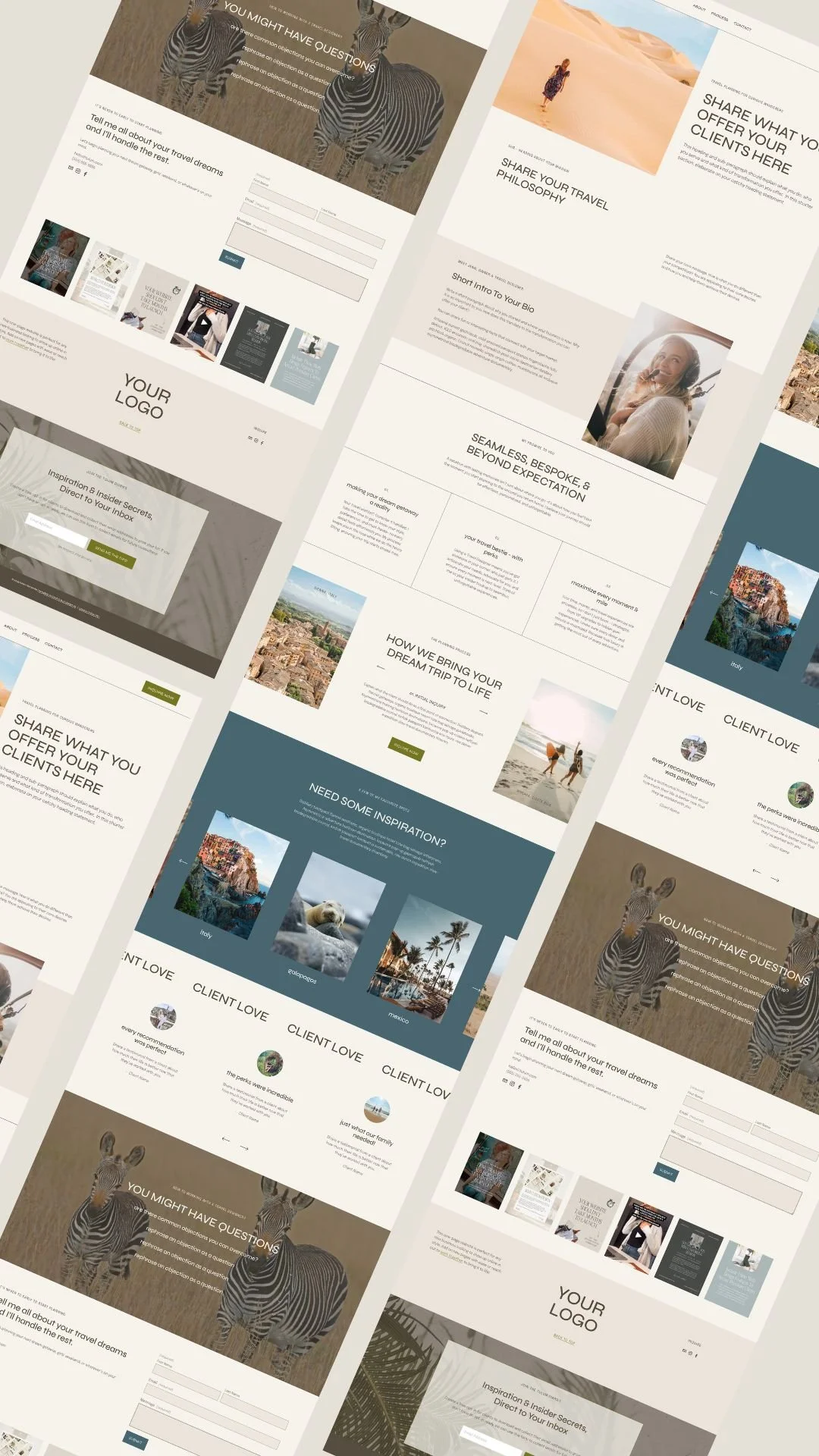
And if a new website isn't in the cards yet, a Welcome & How We Work guide sets the same expectations the moment a client says yes.


'Can't ChatGPT Just Do This?'
The newest one on the list, and almost no Travel Advisor website addresses it yet. Which means the ones that do are immediately ahead.
She's used AI to plan things before. She asked ChatGPT or Claude or Gemini (should I keep going?) for a two-week Italy itinerary and got something that looked pretty solid at first glance. She's genuinely wondering what she'd be missing.
Quite a lot, amr? Getting defensive about AI won't convince her, though, and neither will pretending the question doesn't exist. Name the things a human advocate does that no algorithm can. The hotel you'd never recommend because three different clients came home complaining about the noise from the service entrance. The transfer driver who didn't show, and you making calls until it was sorted, while a chatbot would have suggested she 'try refreshing the page.'
AI can build an itinerary. It can't call in a favour, and it can't know from experience that a particular resort looks nothing like its photos. (For the record, I use AI every day and it's a fantastic tool. It just won't pick up the phone at 11 pm.)
Websites that answer this directly, without being dismissive of AI, will convert the clients who are genuinely asking. Websites that ignore it leave those clients to answer it themselves.
What clients say when you get this right is the emotional one: 'I knew someone had my back.' AI can't give her that, and it's worth saying so on your website.

Notice a Pattern?
Every one of these is the same problem. She leaves when she has unanswered questions, rarely because she's decided against you. She hasn't given up on working with someone. She just isn't confident she'll get straight answers, so she skips the awkward call where she'd find out.
A website that answers these five questions up front gets more inquiries, and it gets better ones. The person who reaches out is already past 'should I even use an advisor?' She's asking about her trip, because she already knows the answer to everything else. That first conversation starts somewhere completely different.
Your action step
Go look at your homepage right now and count how many of these five questions it answers. If it's one or two (or zero, which is more common than you'd think), you don't have a traffic problem. You have a copy problem, and that's very fixable.
You do NOT need to rewrite your whole website this weekend. Pick the question your clients ask most on discovery calls, answer it on your homepage, and hit publish. Then do the next one.
Knowing What To Address Is the First Step
Knowing what to address gets you started. Knowing how to say it is where most advisors get stuck. What goes in the fees section? How do you explain your process without it reading like a terms and conditions page? How do you answer the AI question without sounding defensive?
Two resources that can help
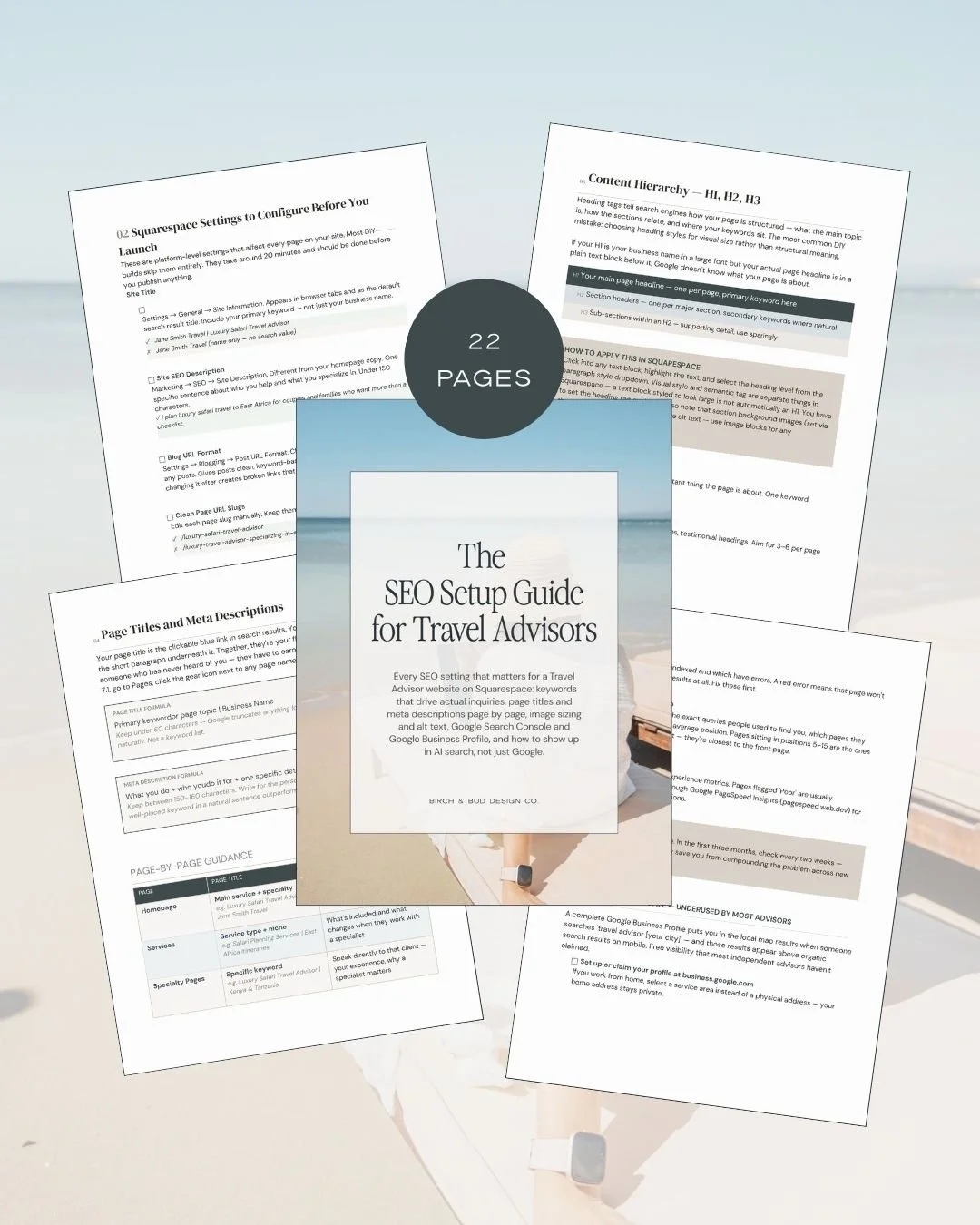
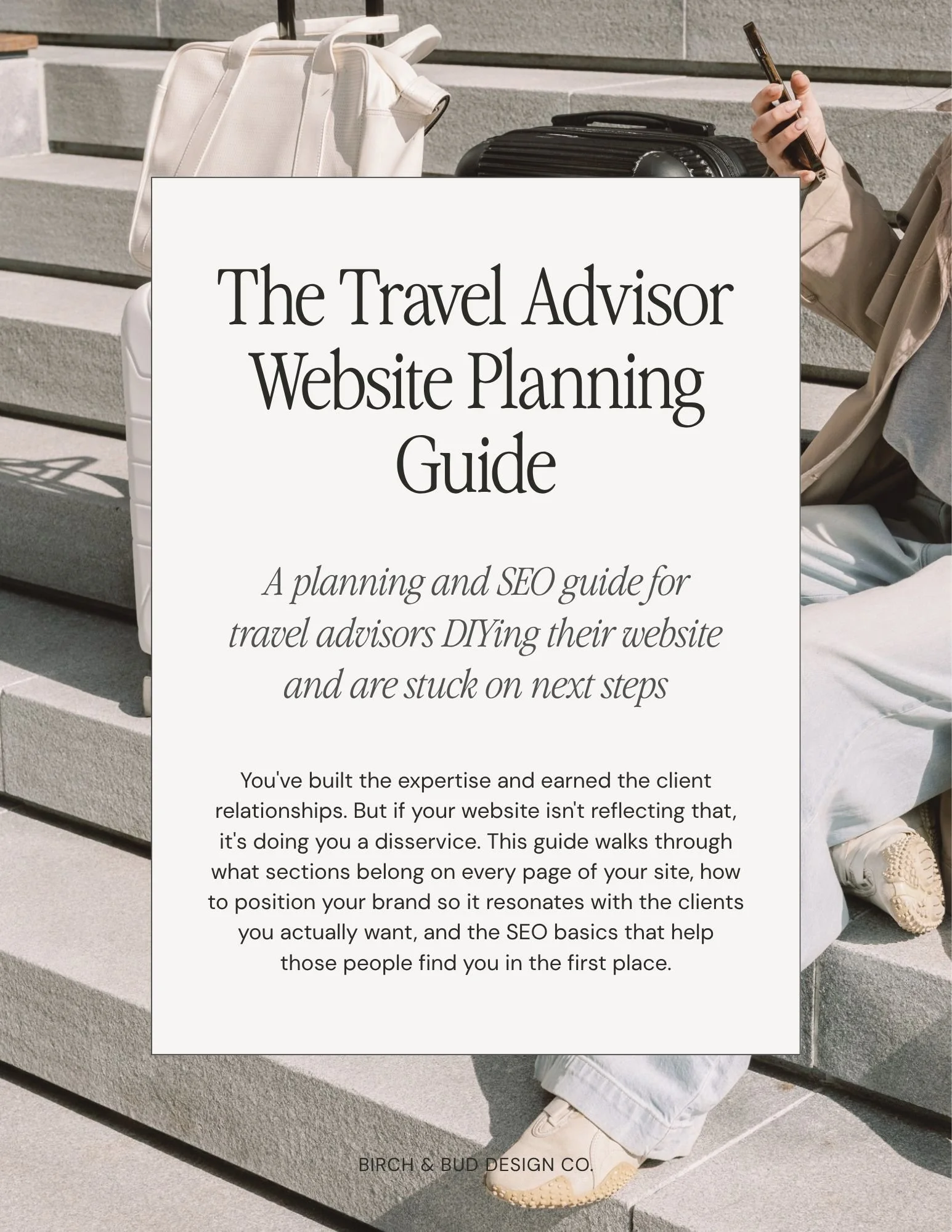
The Website Planning Guide (CA$27) walks you through your website page by page: what belongs on your Home, About, Services, Contact and Blog pages, plus the SEO must-haves that help the right clients find you.
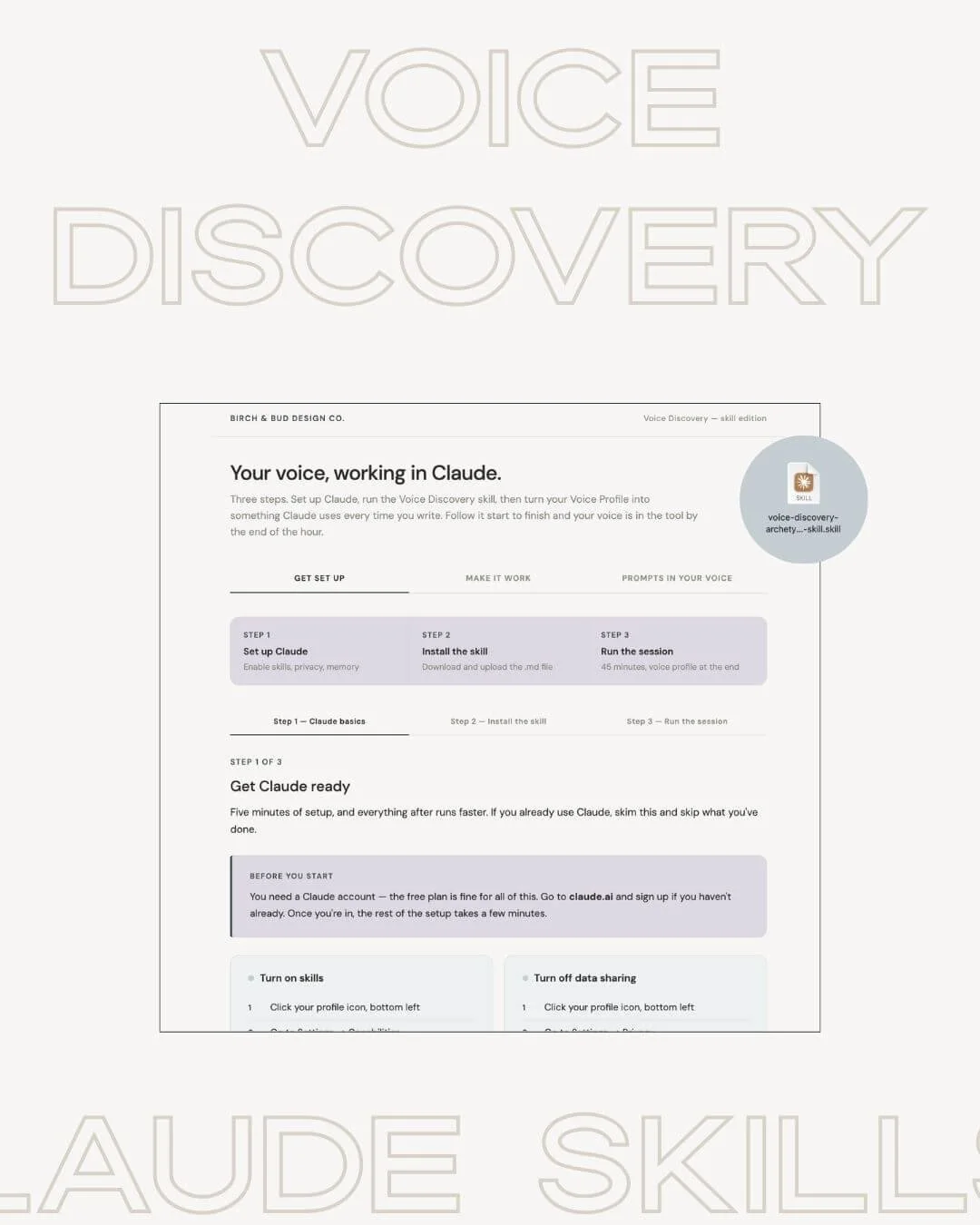
The Voice Discovery Guide (or the Voice Discovery Skill, if you'd rather talk it out with Claude) helps you figure out how you naturally sound, so your copy sounds like you on every channel. It's also the first step toward finding your position in the market.
And if you'd rather hand the whole thing off, you know where to find me!


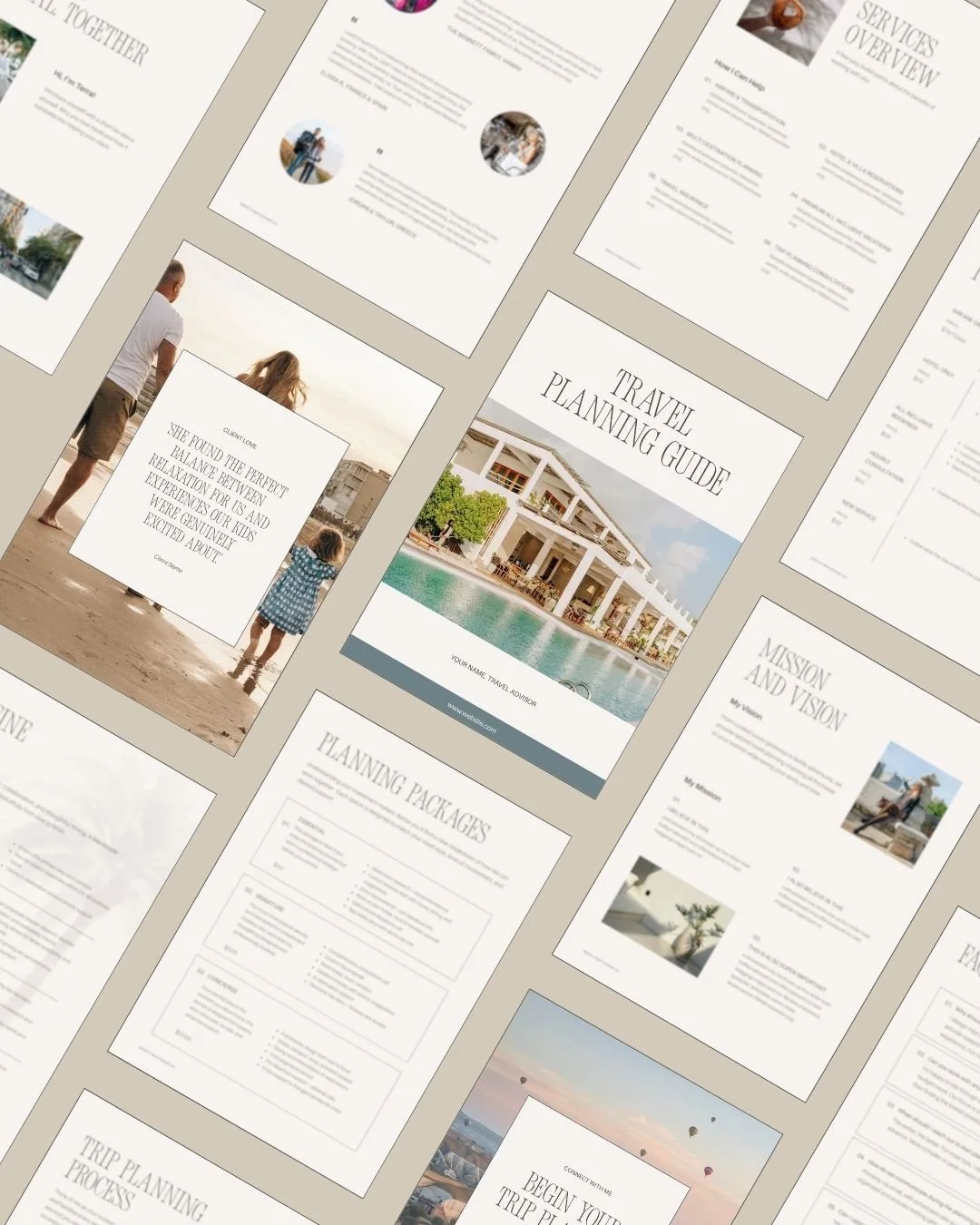




This guide breaks down why fees are non-negotiable, what the industry is charging right now, how to handle objections like a pro, and why your branding might be the reason clients aren't taking you seriously. Plus: real scripts you can use today and resources to finally get your business looking as professional as the service you provide.